The Camouflage Artists of WWII
October 8, 2026
When paintbrushes, patterns, and imagination became weapons of deception
When most people think about the heroes of World War II, they picture soldiers storming beaches, pilots climbing into aircraft, sailors crossing dangerous seas, and Marines fighting across the Pacific. We remember the people who carried rifles, flew combat missions, operated tanks, and stood on the front lines. But behind the enormous military effort that helped defeat the Axis powers were people whose contributions looked very different from traditional combat. Some carried paintbrushes instead of weapons, studied shadows instead of enemy movements, and used imagination as a tool of war.
These were the camouflage artists, designers, engineers, scientists, and military specialists who helped make important equipment, vehicles, ships, and installations more difficult for the enemy to identify. Their work existed at the intersection of art, science, psychology, and military strategy. They understood something remarkably important: sometimes protecting a military target did not mean making it stronger. Sometimes it meant making the enemy look in the wrong place.
A War Where Being Seen Could Be Dangerous
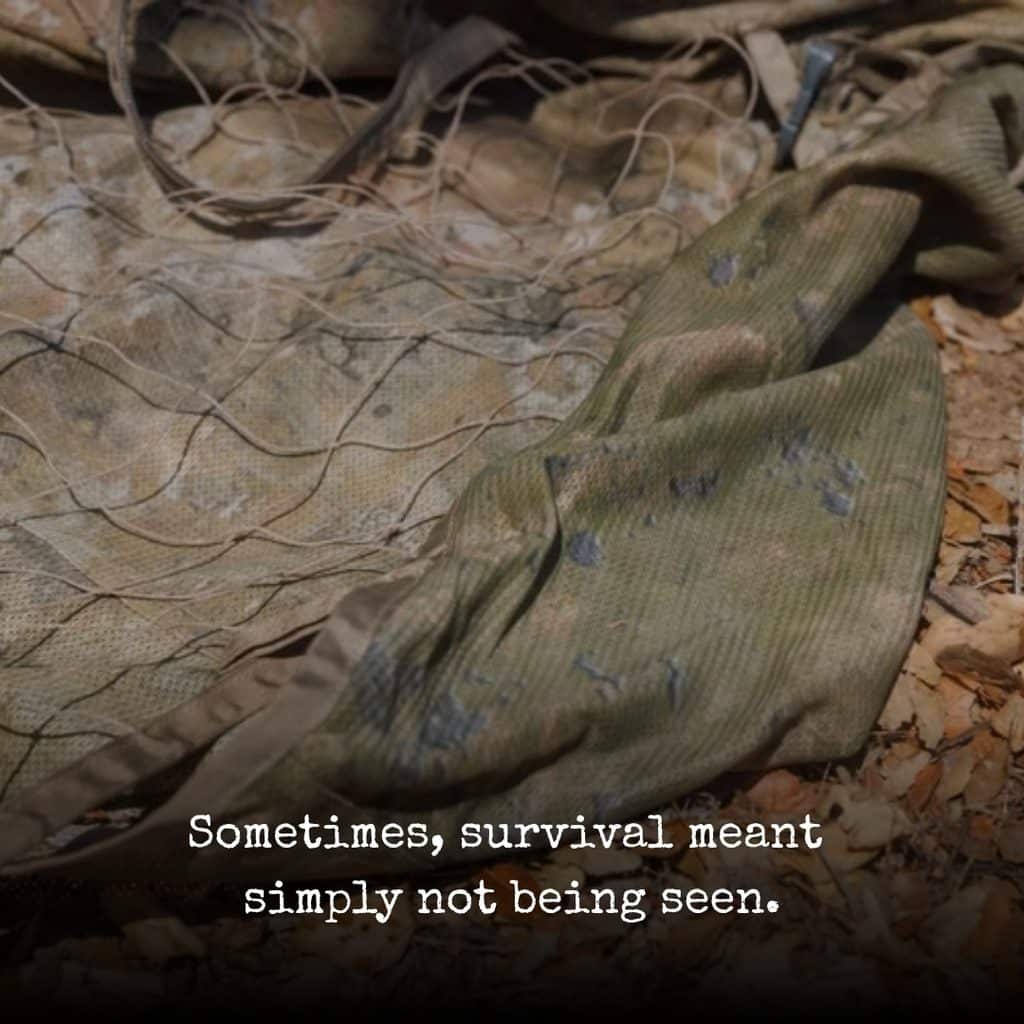
World War II was a war of enormous movement. Ships crossed oceans carrying troops and supplies. Aircraft traveled thousands of miles. Tanks, trucks, artillery, ammunition, and fuel moved toward battlefields around the world. Military installations and factories worked around the clock to support the war effort.
All of that activity created targets.
If an enemy aircraft spotted a factory, airfield, ship, ammunition depot, or other important facility, enemy forces could attack it. The challenge was not always defending a target after the enemy found it. Sometimes, the better strategy was to keep the enemy from recognizing the target in the first place.
That was where camouflage became more than paint.
It became deception.
Camouflage Was Already an Art
The relationship between art and military camouflage existed before World War II. During World War I, the U.S. Navy experimented with bold patterns known as dazzle camouflage. Rather than trying to make a ship blend completely into its surroundings, designers created these patterns to make it harder for observers to determine the ship’s course, speed, or size.
The concept demonstrated something that would become increasingly important during the wars that followed: camouflage did not always have to make an object invisible. Sometimes it simply needed to make the observer uncertain about what they were seeing.
That uncertainty could matter enormously.
Learning From Nature
One of the fascinating influences on the development of camouflage came from the natural world. American artist and naturalist Abbott Handerson Thayer studied the coloration of animals and how their appearance helped them blend into their surroundings. His observations included principles such as countershading, in which an animal’s coloring can reduce the appearance of its three dimensional form and make it more difficult to distinguish from the environment.
Thayer’s ideas influenced military thinking about camouflage, particularly during World War I. The underlying lesson was surprisingly simple: nature had already developed countless ways for living creatures to avoid detection, so humans could learn from those examples.
Military camouflage specialists began applying similar ideas to equipment and structures. Instead of asking only how an object looked, they considered how it appeared from different distances, angles, lighting conditions, and backgrounds.
The battlefield was becoming a place where perception itself could be manipulated.
When Artists Became Part of the War Effort
During World War II, camouflage required much more than choosing a few colors and painting stripes across a vehicle. Artists and designers had to think about perspective, scale, shadows, patterns, terrain, and the way an object would appear from the air.
Something that looked convincing from ground level might look completely different to a pilot flying thousands of feet above it. A building that appeared ordinary from one direction might suddenly reveal itself as a military facility from another.
Camouflage specialists therefore had to think like artists and observers at the same time. They studied the environment and considered what the enemy might expect to see. They experimented with patterns and shapes designed to break up recognizable outlines and make equipment blend into its surroundings.
Their goal was not necessarily to create something beautiful.
Their goal was to create doubt.
The Artist in Uniform
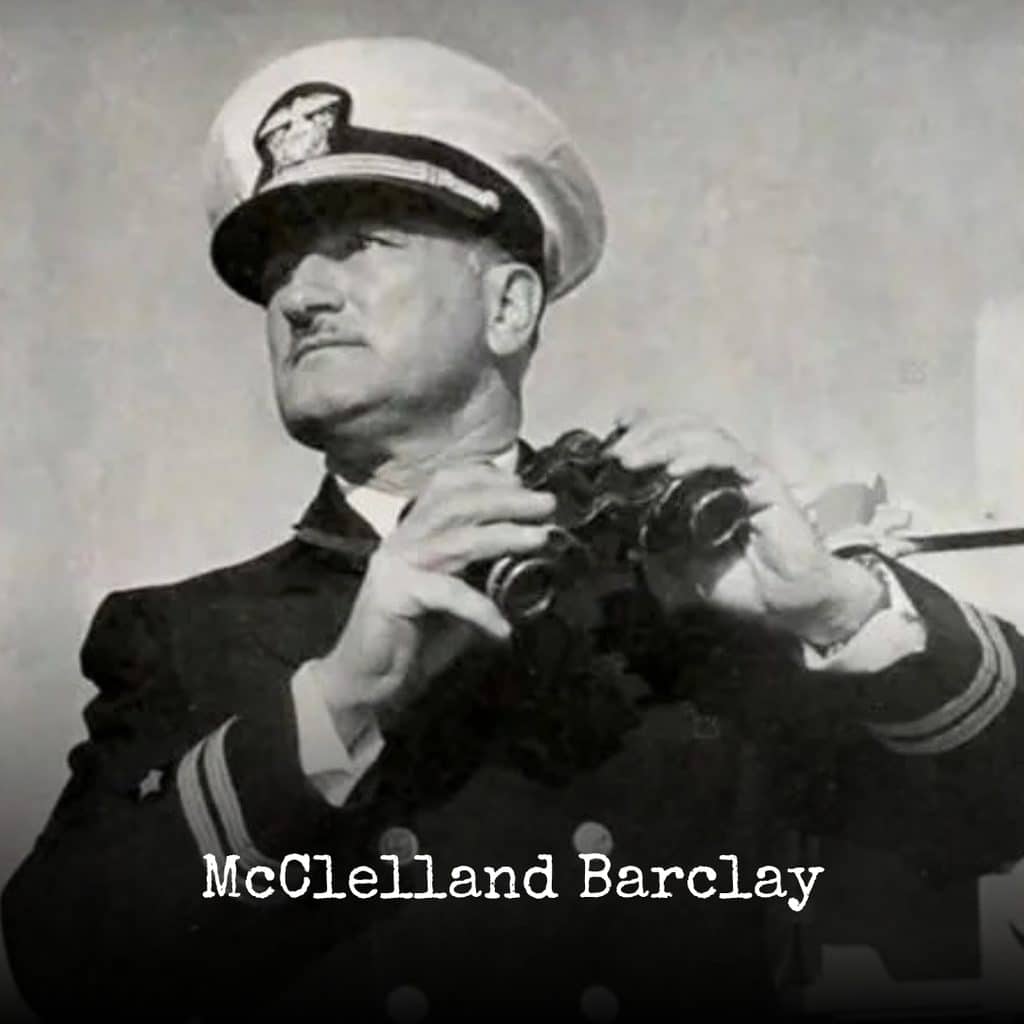
One of the most interesting individuals connected to this story was McClelland Barclay, an accomplished American sculptor, illustrator, and designer who served in the U.S. Navy during World War II. Before the United States entered the war, Barclay prepared experimental camouflage designs for different types of Navy combat aircraft in 1940.
His work was tested, but the Navy ultimately determined that the patterned camouflage he proposed offered little or no useful advantage for those aircraft. That detail is important because it reminds us that wartime camouflage was not simply about artistic creativity. Ideas had to be tested and evaluated against military requirements.
Barclay later served as a Navy recruiting artist and eventually volunteered to become a combat artist. His career represents the unusual way artistic talent could become part of the American war effort. He brought his abilities into military service and used them to document the people and events around him.
His story reminds us that the war effort required many different kinds of talent.
Not Every Illusion Worked
It is tempting to look at photographs of elaborate World War II camouflage and imagine that every strange pattern was brilliant and every deception worked perfectly. The reality was more complicated.
Camouflage had to accomplish a military purpose. It had to work under real conditions, not simply look impressive in a photograph. Designers had to consider weather, distance, lighting, terrain, aircraft altitude, and the capabilities of enemy observers.
The camouflage artist was therefore not working alone. Their work existed alongside military science, engineering, intelligence, testing, and operational experience.
Art was part of the solution, but it had to serve the mission.
The Battlefield of Perception
World War II was not fought only with weapons. It was also fought through information and perception.
What could the enemy see? What did they think they were seeing? What could be hidden? What could be made to look ordinary?
Those questions could influence military operations just as surely as the placement of troops or the movement of equipment.
A well concealed target could force an enemy to spend more time searching. A confusing pattern could make identification more difficult. A disguised installation could potentially remain outside the enemy’s attention.
In that sense, camouflage became part of a larger effort to control what the enemy knew.
The battle did not always begin when the first shot was fired.
Sometimes, the fight began long before that, with careful planning to keep the enemy from seeing what was right in front of them.
Creativity Became a Military Skill
Perhaps the most remarkable part of this story is how many different skills came together during World War II. The United States needed soldiers and sailors, but it also needed engineers, scientists, mechanics, factory workers, photographers, designers, artists, and countless others.
The war demanded creativity on an enormous scale.
People who had spent their lives studying art, architecture, design, nature, and photography suddenly found that those skills could serve a national purpose far beyond the classroom or studio. Their knowledge could contribute to protecting equipment, concealing important locations, and confusing an enemy.
The paintbrush became one more tool in a nation mobilized for war.
The Beauty of Something Designed to Disappear
There is an almost strange beauty in looking at historical photographs of camouflage from World War II. Some patterns look like modern artwork. Others seem almost impossible to understand until you realize what the designer was attempting to accomplish.
But these designs were never created simply for decoration. Behind the colors and patterns was a serious purpose. A concealed vehicle could be harder to identify. A disguised installation could be harder to locate. A ship’s appearance could potentially confuse an observer.
The real measure of successful camouflage was not whether someone admired it.
It was whether someone failed to recognize what they were looking at.
That makes camouflage a fascinating form of military art. Most artists want people to look closely at their work. Camouflage artists were trying to make the enemy look at something and misunderstand it.
Remembering the Camouflage Artists of WWII
When we look back at World War II, it is easy to focus on the enormous moments of history. We remember Pearl Harbor, Normandy, Iwo Jima, the Battle of the Bulge, the liberation of Europe, and the final victory over the Axis powers.
But history is built from more than famous battles. It is also built from thousands of smaller contributions that rarely receive the same attention.
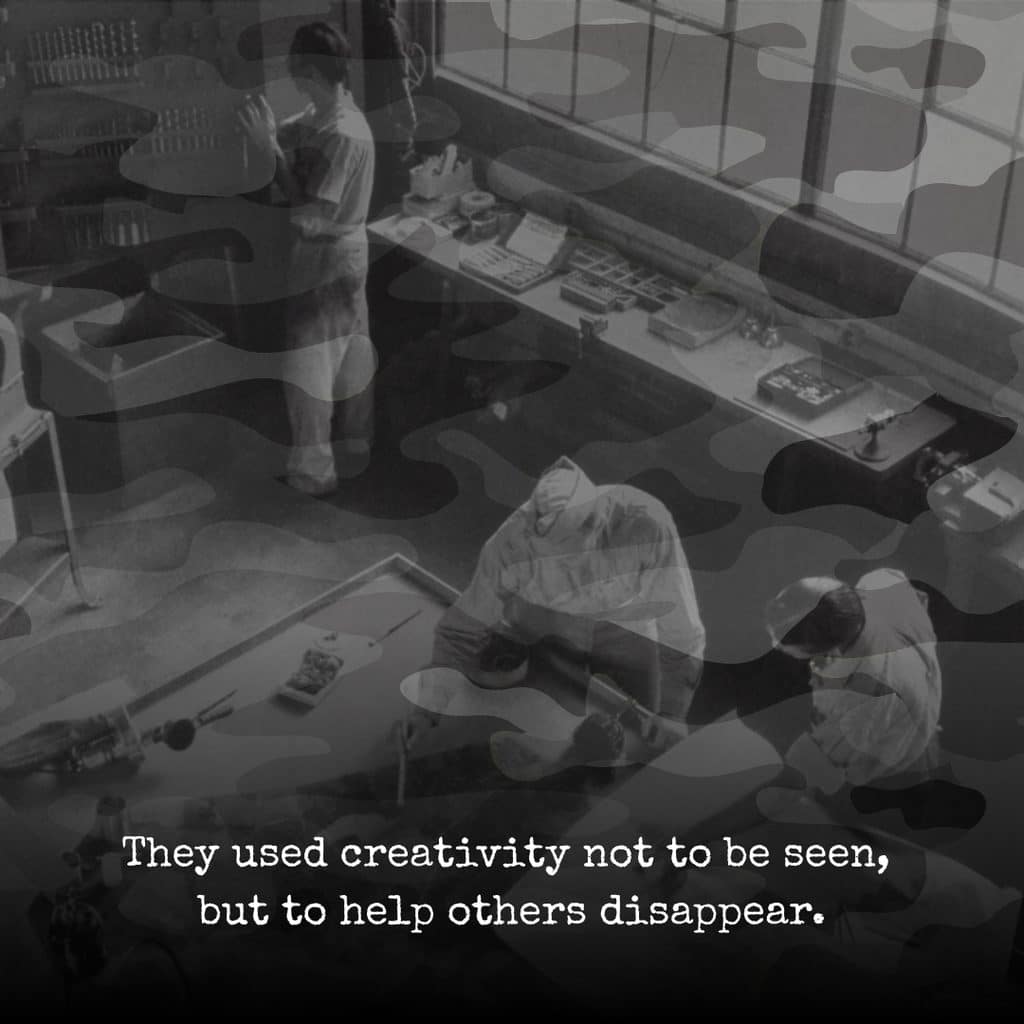
There was the artist studying an aircraft, the designer experimenting with a pattern, the engineer testing a disguise, and the Service Member applying camouflage to equipment. There were people looking at photographs and asking whether something would be recognizable from the sky.
These people were part of a massive American effort that demanded every available talent.
Their work was designed to disappear.
Their contribution should not.
When Art Became Part of the Fight
The camouflage artists of World War II remind us that service does not always look the way we expect it to look. Sometimes service means carrying a rifle. Sometimes it means flying an aircraft, repairing an engine, treating the wounded, or building the machines that keep an army moving.
And sometimes, it means taking a brush and using art to help protect the people doing all those other things.
The artists and designers of World War II understood that seeing is not always believing. They used color, shape, shadow, perspective, and imagination to challenge the enemy’s eyes. Their work helped create another layer of protection around a nation at war.
Today, the camouflage may be faded. The equipment has become history. The people who created these designs are largely remembered only by those who study this unusual chapter of World War II.
But their ingenuity remains.
Because they showed that courage can take many forms and that sometimes the most unexpected talent can become an important part of the fight.
They did not make war beautiful. They used art to help people survive it.
Their work was never meant to be admired by the enemy. It was meant to be missed, overlooked, and misunderstood.
Their art was designed to disappear. Their story should never do the same.
About the Author

Mike Isaac-Jimenez is a 25-year U.S. Air Force Veteran based in San Antonio, TX. He currently serves as a Marketing and Communications Contractor with Soldiers’ Angels, where he shares his passion for storytelling with his dedication to honoring military service. Mike holds a B.S. in Technical Management (Project Management) from Embry-Riddle Aeronautical University, along with A.A.S. degrees in Mechanical & Electrical Technology and Mechanical Engineering. He writes to preserve the legacies of America’s heroes and honor those who served and are still serving.