Honoring the Army Reserve Birthday: A Conversation with Dr. Kyle Brooks
April 23, 2026
Each year, the Army Reserve Birthday serves as a reminder of the critical role citizen-Soldiers play in defending our nation while continuing to lead in their civilian lives and communities. It’s a legacy built on readiness, sacrifice, and a unique balance of service that connects the military directly to the American people.
At Soldiers’ Angels, we’re proud to have leaders within our organization who not only support Service Members and Veterans, but who also wear the uniform themselves.
To mark the occasion, we spoke with Dr. Kyle Brooks, a member of the Soldiers’ Angels Board of Directors and a dedicated Army Reserve Soldier. In this conversation, he shares what the Army Reserve means to him, how it has shaped his life, and why its role remains essential today.
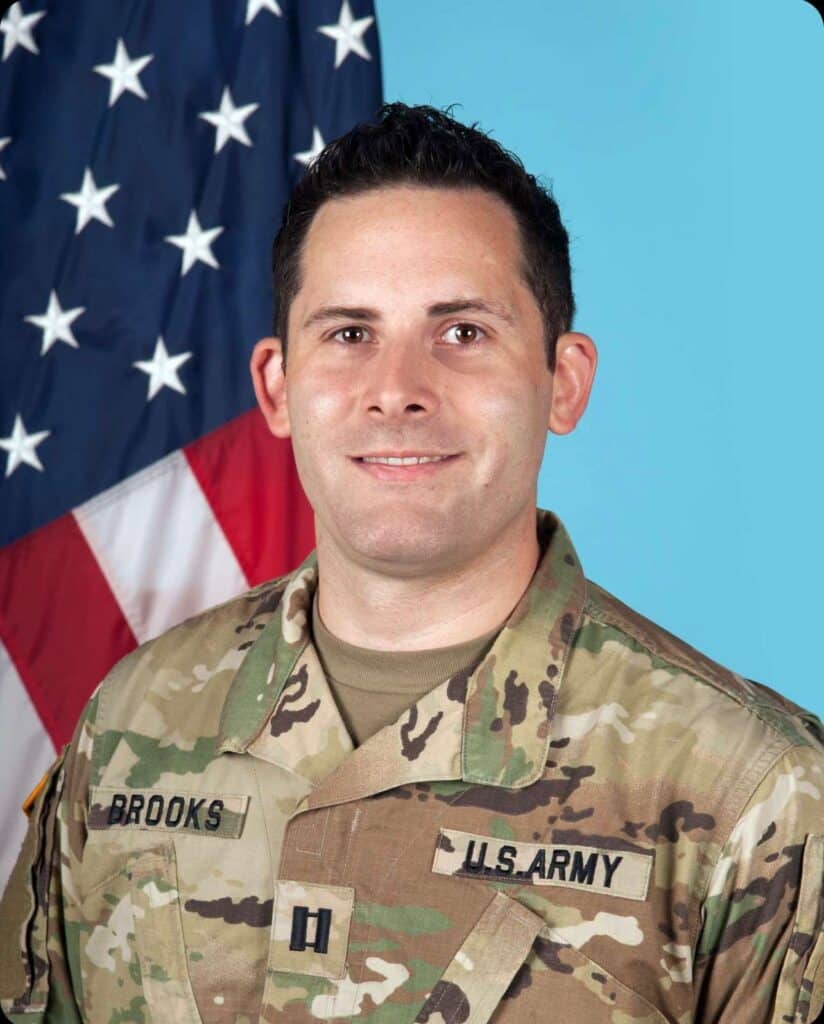
What does the Army Reserve Birthday mean to you personally?
The Army Reserve Birthday is a moment to reflect on the role citizen-Soldiers have played in shaping our nation’s history, from mobilizing in World War I and World War II, to Korea and Vietnam, to the sustained deployments of the post-9/11 era. Reserve Soldiers have consistently stepped forward during times of global conflict and national emergency while continuing to lead in their civilian careers and communities.
For me, it is a reminder that wearing this uniform connects us to more than a century of service defined by readiness, sacrifice, and quiet professionalism.
How has serving in the Army Reserve shaped who you are—both personally and professionally?
I enlisted while I was in college, and nearly two decades later, the Army Reserve has shaped almost every dimension of who I am. I’ve served in different units, held multiple MOSs, and moved from carrying litters as a line medic to commanding a company. Each role required a different kind of leadership and forced growth I would not have experienced otherwise.
Personally, it strengthened my resilience, sharpened my discipline, and deepened my appreciation for the support system behind every Soldier. Professionally, it improved my decision-making under pressure and reinforced a simple leadership truth: mission matters, but people make the mission possible.
Every chapter of service has brought new responsibility and perspective. I am a better husband, father, son, friend, employee, and Soldier because of the standards and accountability the Army Reserve requires.
Many people don’t fully understand the role of the Army Reserve. How would you describe its impact and importance today?
If you want to understand the Army Reserve, picture this: on Monday morning, a Soldier might be performing trauma surgery, managing a construction site, teaching in a classroom, or serving on a police force. On drill weekend or deployment, that same individual applies those real-world skills in uniform, often in highly specialized roles that the active force depends on.
The Army Reserve is not a backup plan. It is the Army’s primary source of specialized capabilities, from medical and civil affairs to logistics, engineering, cyber, and sustainment. In many cases, Reserve units provide the majority of those functions across the force. When the nation needs large-scale mobilization, disaster response, or sustained overseas operations, the Reserve expands the Army’s capacity quickly and decisively.
What makes it powerful is the blend. Reserve Soldiers bring civilian expertise and private-sector experience into Military formations. That cross-pollination sharpens problem-solving and keeps the force connected to the society it serves.
The impact is not always visible day to day, but it is decisive when it matters most. The Army Reserve provides depth, capability, and flexibility without maintaining all of that capacity on full-time active duty. That balance is strategic and essential.
As both a Soldier in the Army Reserve and a board member of Soldiers’ Angels, how do these roles intersect for you?
Serving in the Army Reserve and serving on the board of Soldiers’ Angels intersect in a practical way for me. In uniform, I see firsthand the operational demands placed on Soldiers and their families. On the board, I see the responsibility of ensuring a nonprofit can meet those needs with discipline, transparency, and long-term sustainability.
I have had the privilege of serving Soldiers’ Angels first as an advisory council member, then as a member of the Board of Directors, and now as Secretary of the Board. That progression has deepened my respect for governance, fiduciary responsibility, and the trust donors place in the organization. It reinforces something I experience in the Reserve as well: support does not happen by accident. It requires structure, accountability, and committed people.
One role is about leading and serving alongside Soldiers. The other is about strengthening the network that stands behind them. Both demand stewardship.
What is one moment from your time in the Army Reserve that has stayed with you?
Years ago, when I was a young Specialist serving as a line medic, I had a friend who took me under his wing. I was a confident early-twenties kid who thought I had most things figured out. He was in his forties. He had already built a career, raised a family, and chose to put on the uniform later in life because he wanted to give back.
We participated in a joint training exercise with the Navy. It was a large-scale medical and logistics drill designed to stress the system. Long days. Limited sleep. Controlled chaos. I was focused on proving myself. He was focused on something different.
After one particularly hectic lane, he pulled me aside, not to critique my medical skills but to slow me down. He told me that competence earns respect, but composure builds trust. In the Reserve especially, people are watching how you lead because they chose to be there. They do not need ego. They need steadiness.
What stayed with me was not the scenario. It was the realization that the Army Reserve brings together people at very different life stages, and that mentorship does not always follow rank. Sometimes it is a quiet conversation that reshapes how you lead.
What would you want Americans to understand or appreciate about Army Reserve Soldiers?
Army Reserve Soldiers are not part-time in their commitment. They are full-time in their responsibility.
They train to the same standards, wear the same uniform, and deploy alongside the active component when called. When the uniform comes off, they return to classrooms, hospitals, construction sites, courtrooms, small businesses, and corporate offices. They live in the communities they serve.
Behind that service is sacrifice. Families absorb the impact of mobilizations. Employers support time away. Careers pause while the mission continues. Yet they step forward anyway.
The Army Reserve represents the connection between the Military and the American public. Citizen-Soldiers bring civilian expertise into uniform and carry military discipline back into their communities. That balance strengthens both the force and the nation.
Standing Behind Those Who Serve
As we celebrate the Army Reserve Birthday, we honor not only the history of the Army Reserve, but the individuals who continue to carry that legacy forward every day.
Dr. Brooks’ perspective is a powerful reminder that service doesn’t stop when the uniform comes off—it continues in communities, in families, and in organizations like Soldiers’ Angels that stand behind those who serve.
If you’re looking for a way to make an impact, we invite you to get involved. Whether it’s sending a care package, writing a letter, or volunteering your time, your support helps ensure that no Service Member feels alone. Get started as a volunteer here. Together, we can continue to stand behind Army Reserve Soldiers—and all who serve.
About the Author

Ashley Ray has been a member of the Soldiers’ Angels communications team since 2013. She supports blog writing and social media and loves telling stories of Angel volunteers, Service Members, and Veterans.