Voices From Below: The Sailors Who Were Trapped Beneath The Water
December 5, 2025
On the quiet morning of December 7, 1941, just before the sun climbed over the mountains of Oahu, most of the sailors aboard the battleships of Pearl Harbor believed they were waking to an ordinary Sunday. Some planned to write home. Some were preparing for chapel. Some were laughing with friends over coffee. None could have imagined that in a matter of minutes, their world would be swallowed by smoke, steel, fire, and for many, the crushing darkness below the waterline.
This is a story often overshadowed by the explosions above deck, the story of the sailors trapped beneath the ocean’s surface, fighting time, fate, and fear. It is a story of voices from below.
When the Steel Closed In
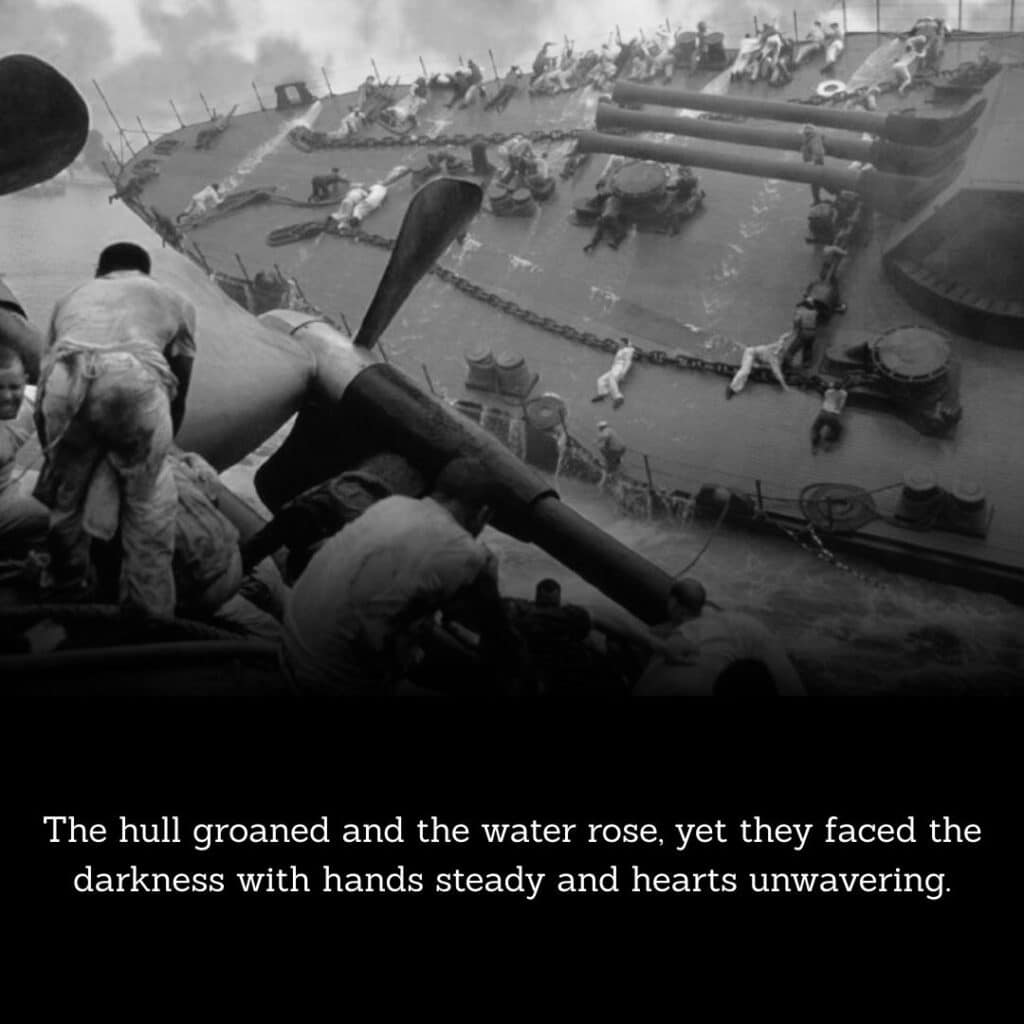
The first explosions shook the harbor like a giant exhaling in rage. Bombs tore through metal hulls. Torpedoes ripped open the sides of ships that had stood proudly as symbols of American strength.
For hundreds of sailors, the nightmare was not the chaos above but the moment the ship groaned, tilted, and began to swallow seawater. Compartments twisted. Passageways collapsed. Lights flickered out. Doors sealed shut under unforgiving pressure.
Those who found themselves trapped below deck entered a world unlike anything we can truly imagine: a world of rising water, pitch-black darkness, and the knowledge that rescue might never come.
And yet, they fought.
Some scrambled to close watertight hatches to save shipmates in other compartments, knowing they were sealing their own fate in the process. Some groped their way through the dark, searching for air pockets. Some tapped messages against the steel hull, hoping someone above could hear.
Those taps, the metallic heartbeat of men refusing to give up, echoed across the harbor long after the attacks ended.
A Battle Measured in Minutes, Hours… and Hope
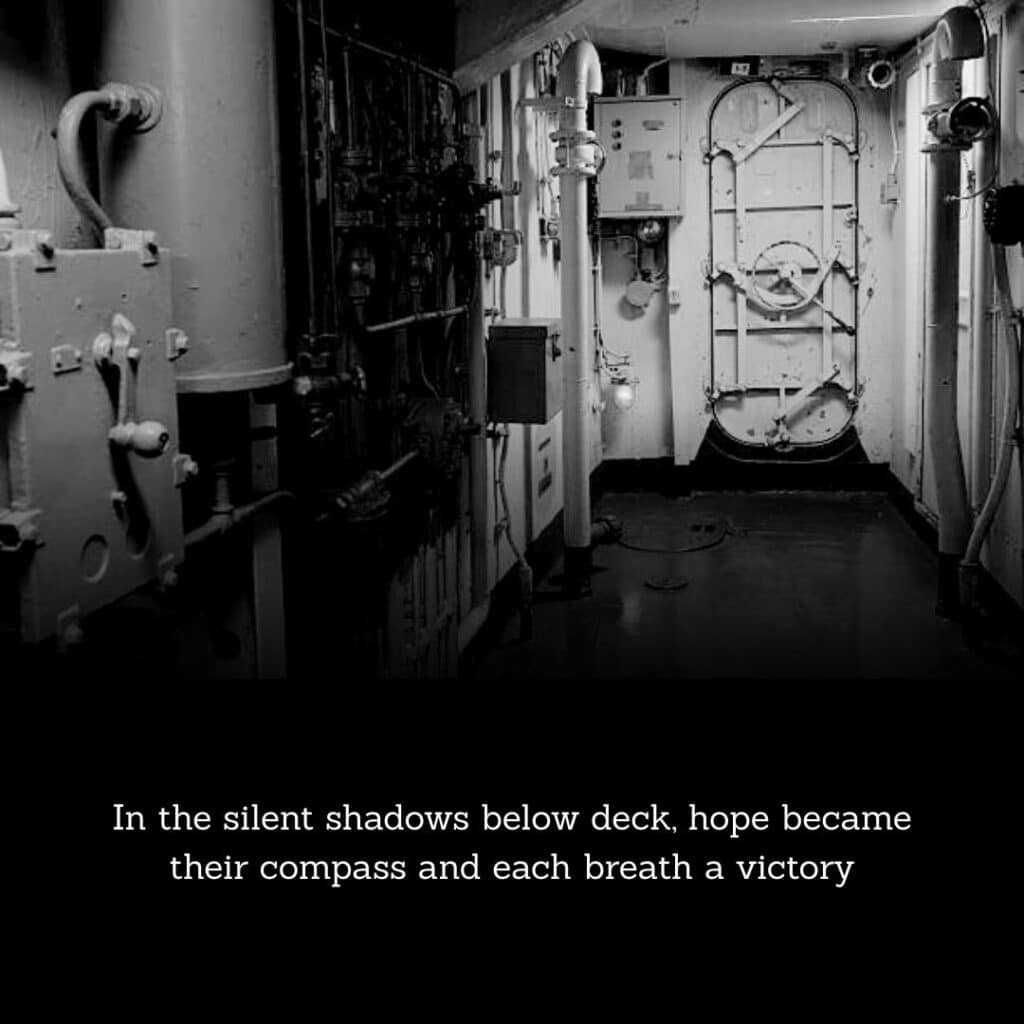
Trapped sailors had no view of the burning skies, the smoke columns, the falling bombs. Their battle was quieter, but no less heroic. It was fought with what they had left: courage, instinct, and the will to hold on just a little longer.
They formed small groups in pockets of trapped air. They took turns breathing closest to the ceiling. They prayed. They shared stories. Some even sang, their voices trembling but determined not to let the darkness win.
On the USS West Virginia, rescuers later recounted faint knocking coming from deep inside the hull, steady, rhythmic, and heartbreakingly human.
On the USS Oklahoma, sailors trapped upside down tried to orient themselves in a ship that had become a metal tomb.
On the USS Arizona, the devastation was so catastrophic and immediate that many never had the chance to cry out.
But on ships like the Utah, Oklahoma, and West Virginia, efforts to reach the trapped continued for days. Cutting torches glowed through steel. Divers risked their lives to reach pockets where sailors might still be waiting. Some were found. Many were not.
What stayed with the rescuers for the rest of their lives was not the silence but the stubborn persistence of those taps, those signals of life, those voices from below.
The Final Messages We Never Heard
Most of the sailors trapped beneath the water had time to reflect, moments that no human should ever have to endure. And though we will never know their final thoughts, historians, survivors, and families have pieced together a painful truth.
Their last messages were of home.
Of loved ones.
Of duty.
Of each other.
They didn’t die alone. They died supporting one another in the dark.
One survivor, rescued from another compartment days later, recalled a shipmate saying, “If they don’t get us out, tell my mother I wasn’t scared.” He wasn’t lying. He was choosing courage for her sake.
Why These Voices Still Matter
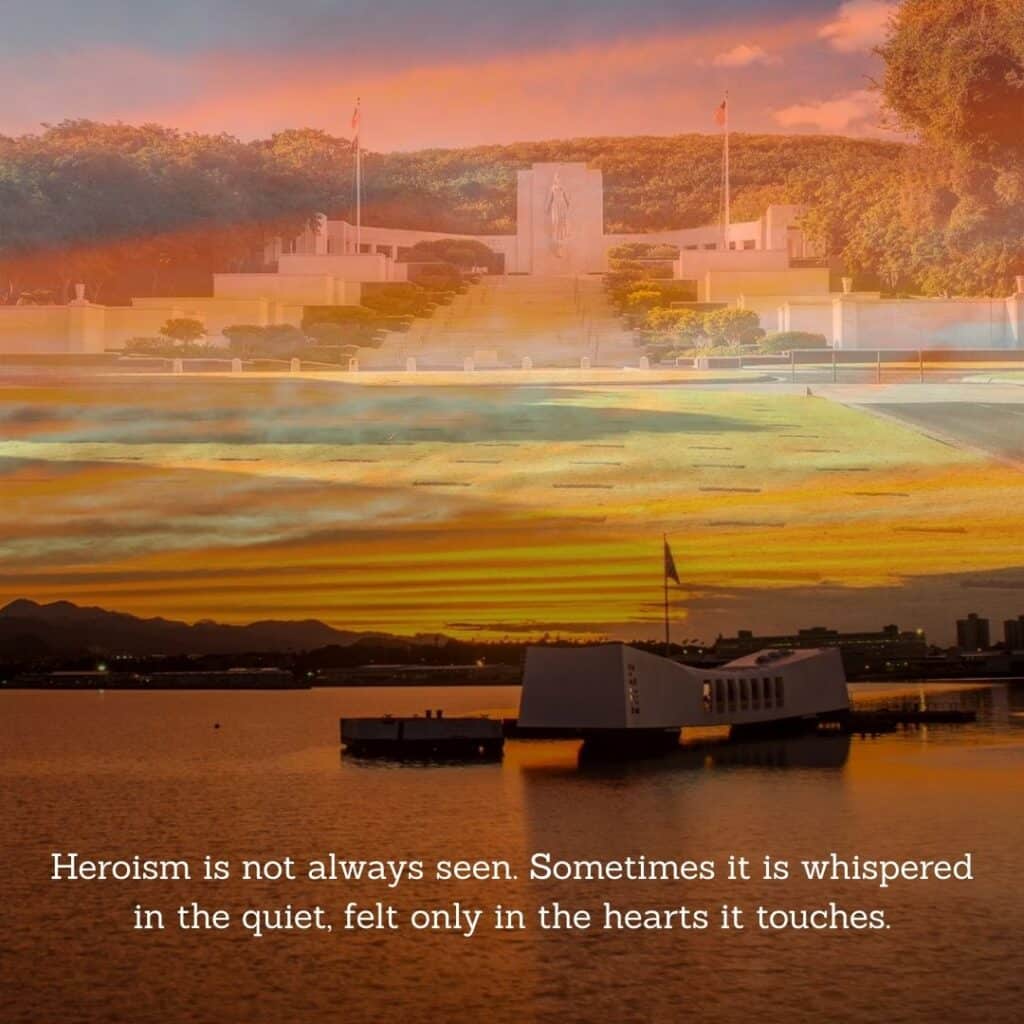
We often honor the heroes who ran toward the fire, who manned the guns, who took to the skies. But the bravery shown below deck is just as sacred because it required a different kind of strength.
The strength to face the end not with panic, but with faith. Not with hopelessness, but with each other.
These sailors remind us that heroism does not always look like triumph. Sometimes it looks like endurance. Sometimes it looks like refusing to surrender even when the world has collapsed around you.
Their stories teach us that courage is not only loud. It is also quiet, patient, and steadfast.
A Legacy Carried Forward
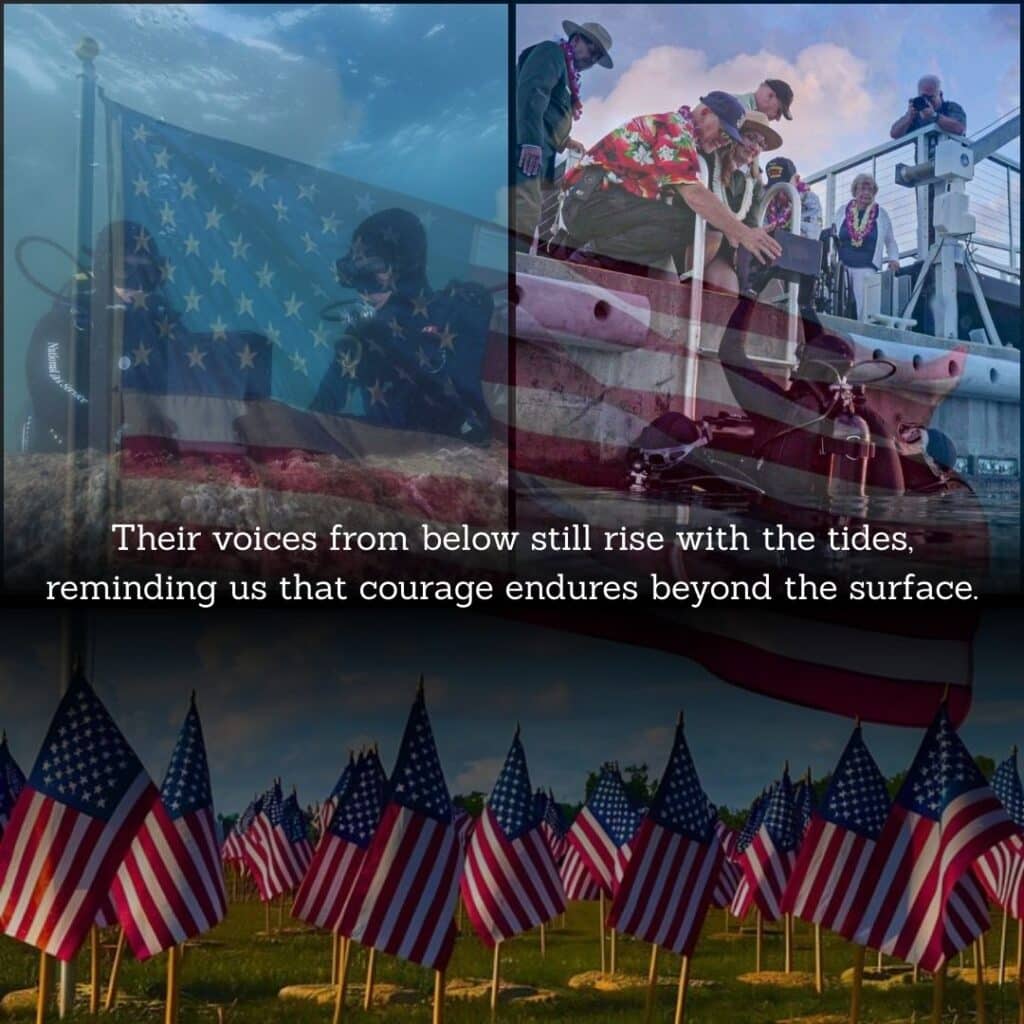
Today, as divers study the wrecks and families visit the memorials, those voices still echo. The tapping on steel. The whispered prayers. The promises made in the dark.
And every December, when America pauses to remember Pearl Harbor, we do more than honor a moment in history. We honor the men whose bravery remained unseen by the sun, witnessed only by the sea.
Their story is not one of tragedy alone. It is a story of loyalty. Of sacrifice. Of love powerful enough to rise through the water and endure through generations.
They were not lost.
They were not silent.
And they will never be forgotten.
About The Author

Mike Isaac-Jimenez is a 25-year U.S. Air Force Veteran based in San Antonio, TX. He currently serves as a Marketing and Communications Veteran intern with Soldiers’ Angels, where he shares his passion for storytelling with his dedication to honoring military service. Mike holds a B.S. in Technical Management (Project Management) from Embry-Riddle Aeronautical University, along with A.A.S. degrees in Mechanical & Electrical Technology and Mechanical Engineering. He writes to preserve the legacies of America’s heroes and honor those who served and are still serving.