The Spark That Divided a Nation: The Start of the American Civil War
April 7, 2026
There was no single moment when the entire country stopped and realized what was about to happen.
No unified gasp. No nationwide announcement that everything was about to change.
For most Americans, the start of the American Civil War did not begin with certainty. It began with a feeling. A quiet tension that had been building for years. A sense that something was shifting beneath the surface, even if no one could fully explain it. Conversations had grown sharper. Trust had grown thinner. The idea of a shared future felt more fragile than it once had.
Still, life went on. People worked. Families gathered. Communities carried forward with their routines. And like so many moments in history, the edge of something life-changing did not feel dramatic at first. It felt uncertain.
The Night Before Everything Changed
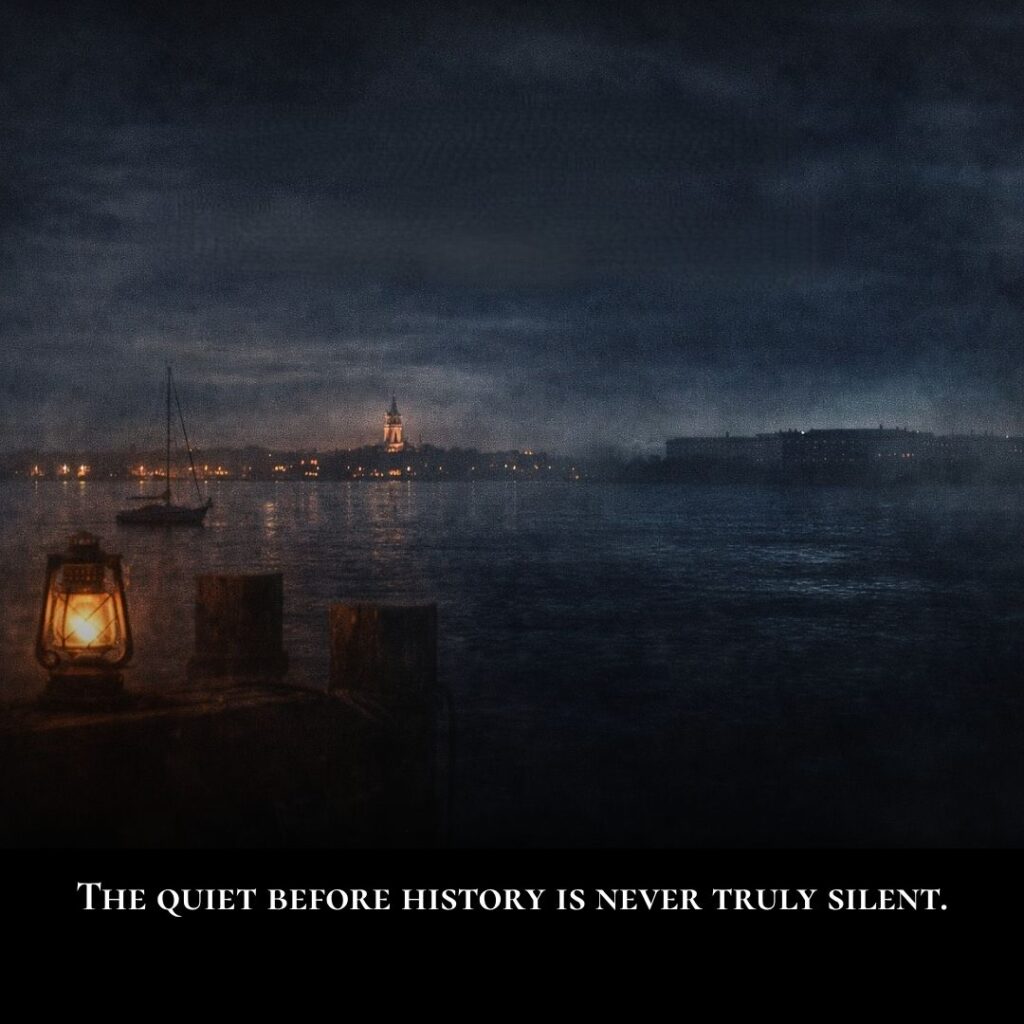
On the night of April 11, 1861, that uncertainty hung heavily in the air, especially along the coastline of Charleston. The harbor was quiet, but not at peace. Those who lived nearby could sense it. Something was different. Something unresolved. Out in the water stood Fort Sumter, a United States military installation surrounded by growing tension.
Inside, soldiers moved through the darkness with purpose, but not with clarity. They had been waiting, watching, and listening for something that had not yet come. Some tried to rest while others checked their equipment more than once. A few took time to write letters, perhaps sensing that what lay ahead might not allow for another chance. There were no speeches or dramatic declarations, only quiet moments filled with questions no one could answer. Would anything happen at all, or would the tension pass as it had before?
4:30 AM
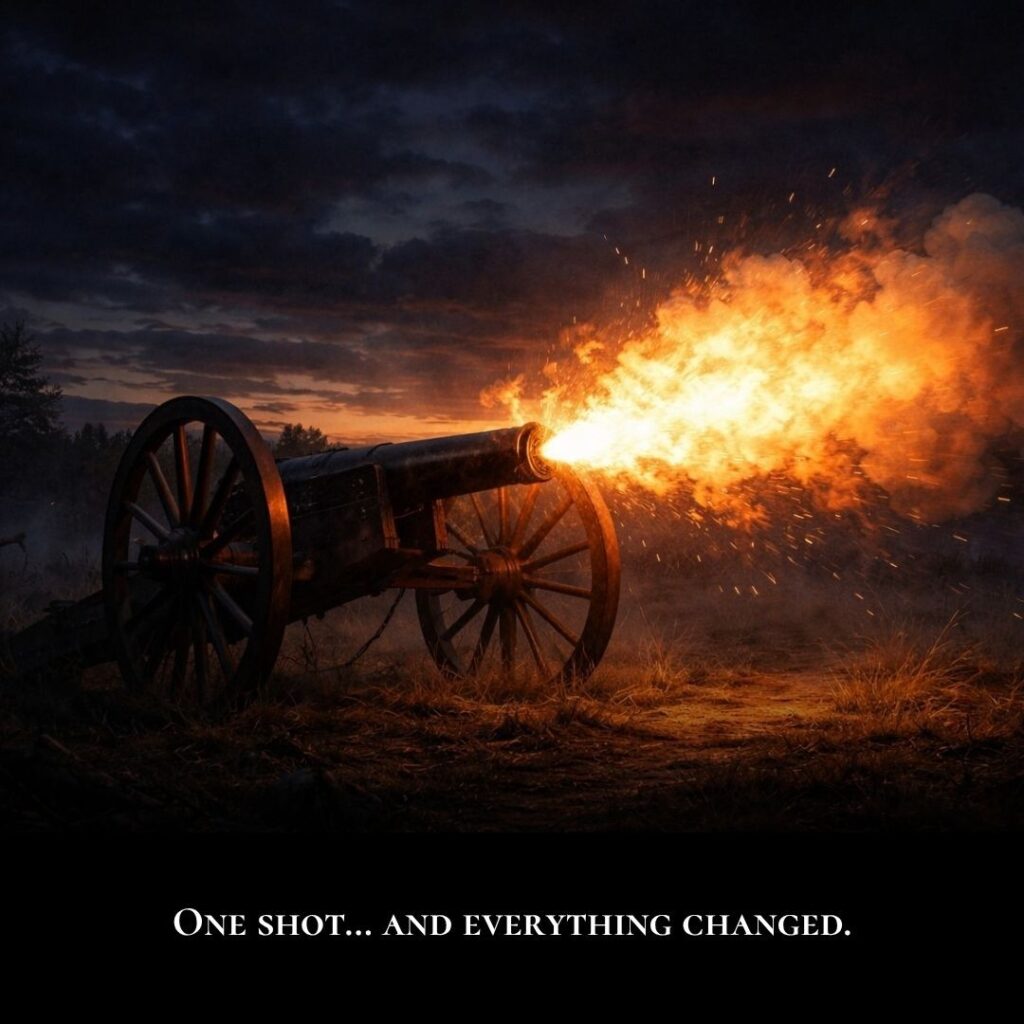
Before sunrise, those questions were answered. At approximately 4:30 in the morning on April 12, the first cannon fired. It did not sound like history in the making. It sounded abrupt, jarring, and final, the kind of sound that does not ask for attention but demands it.
Inside Fort Sumter, men were pulled from sleep into immediate action. Instinct took over as they moved quickly to their positions, not because they fully understood the moment, but because they knew they had to respond. Training and discipline filled the space where certainty could not. Beyond the fort, in Charleston, the sound carried across the water. People woke suddenly. Windows opened. Doors creaked as families stepped outside, drawn by something they could not yet see. Some stood in silence, listening, while others spoke in hushed tones, trying to make sense of what they were hearing. There was no clear explanation, only the echo of cannon fire rolling through the early morning air.
The Long First Day
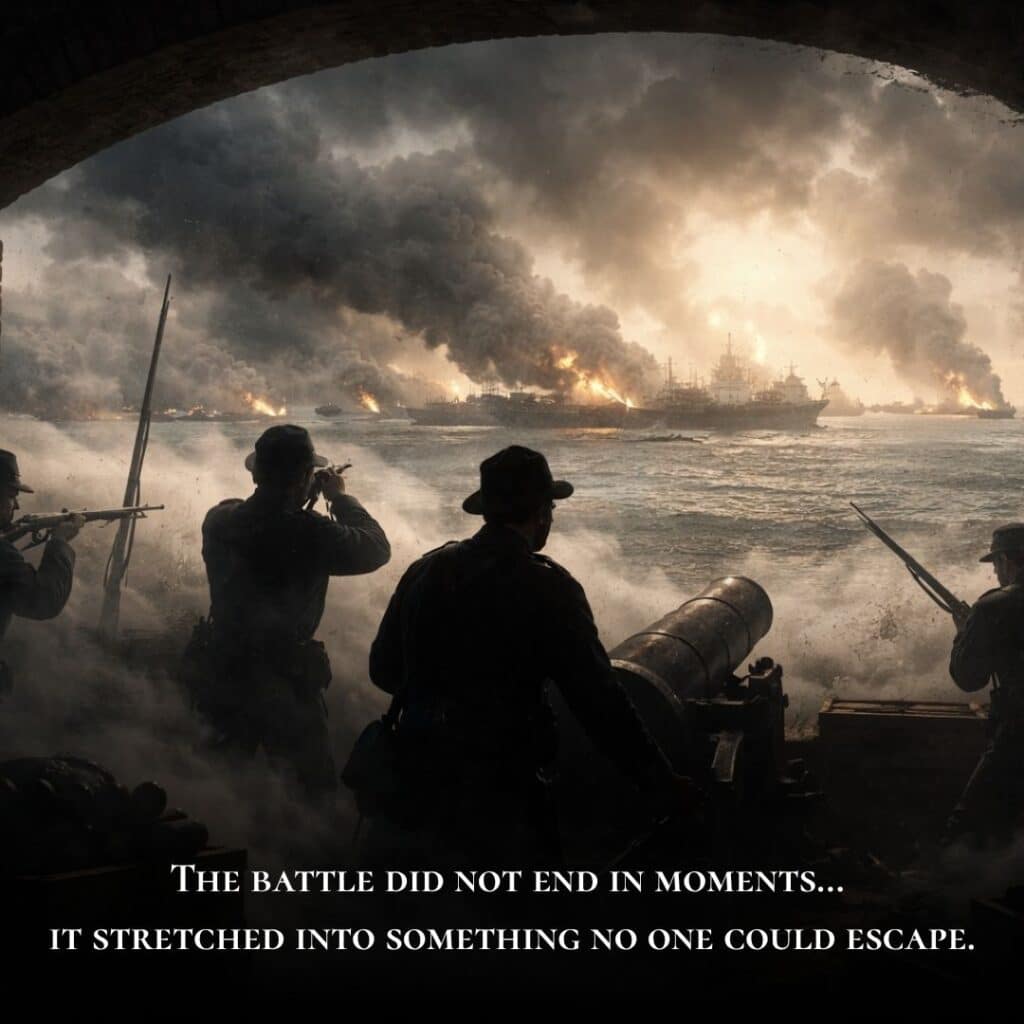
The bombardment did not end quickly. It continued hour after hour, stretching into something that could no longer be dismissed as a brief exchange. Smoke began to rise, visible even from a distance, and the sky itself seemed to carry the weight of what was happening.
Inside the fort, soldiers worked under pressure that few of them had ever known. They moved supplies, returned fire, and followed orders with focus and determination. Yet between those actions were quieter moments that history rarely captures. A soldier might glance upward during a pause, think briefly of home, or begin to understand, in a quiet and undeniable way, that life had changed. This was no longer anticipation. This was reality.
Watching From the Shore
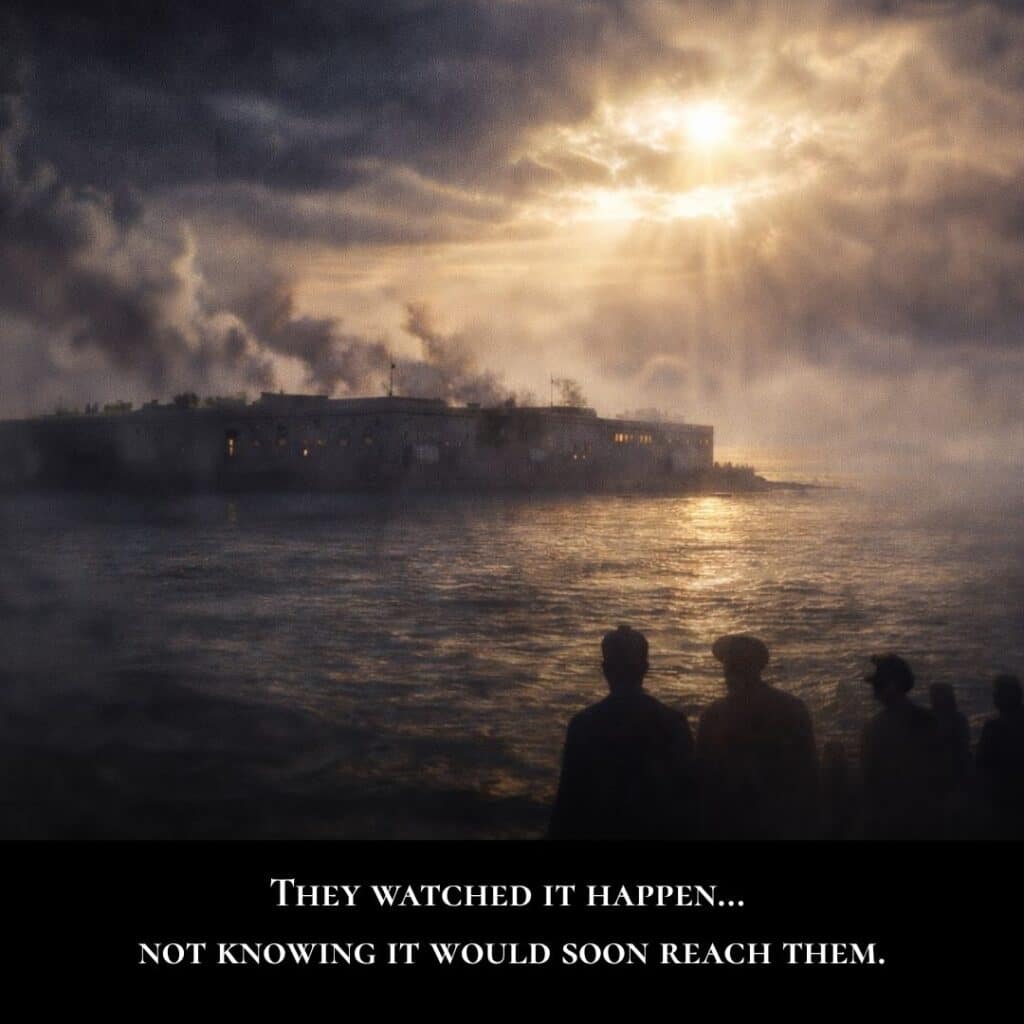
Across Charleston, civilians gathered wherever they could see the harbor. Rooftops, balconies, and shorelines became places of observation and reflection. Some watched in silence, while others asked questions with no immediate answers. How long would this last? Would it spread? What happens now?
Adults tried to reassure children, even as they struggled to find words they truly believed. The sound of cannon fire continued, filling the gaps where answers should have been. As the hours passed, something began to shift, not just in what people saw, but in what they understood. This was not going to remain contained, and it was not going to end by nightfall. The realization came quietly that whatever was unfolding was far larger than a single place.
Inside the Fort
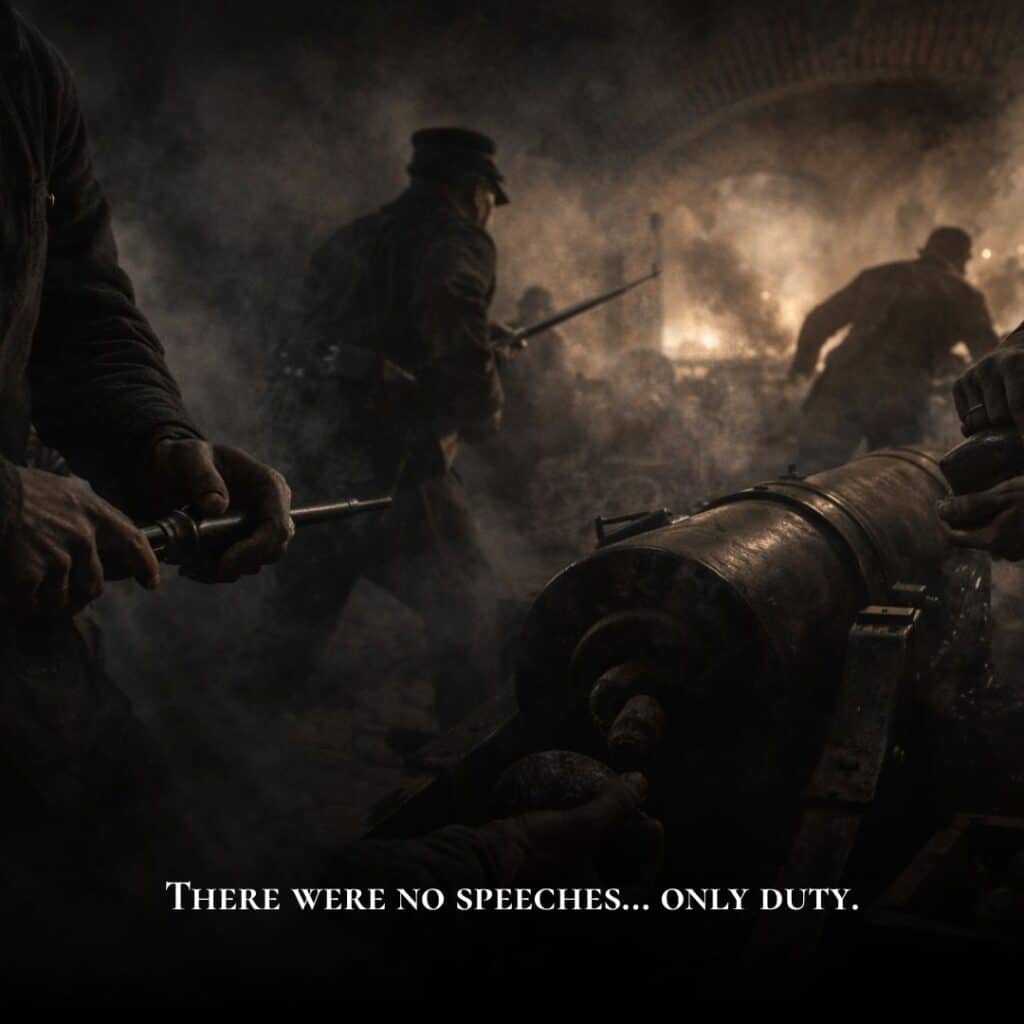
Despite the intensity of the bombardment, something steady remained inside Fort Sumter. Discipline held firm. The soldiers maintained their positions, carried out their duties, and worked together in a rhythm shaped not by certainty but by responsibility.
There were no grand speeches echoing through the walls and no dramatic turning points in those early hours. There was only action. Loading, firing, moving, and waiting. And in between, there was time to think. Soldiers thought about what this meant, what might come next, and whether the world they knew would still exist when it was over. Even then, there was a quiet sense that this was only the beginning.
When It Finally Stopped
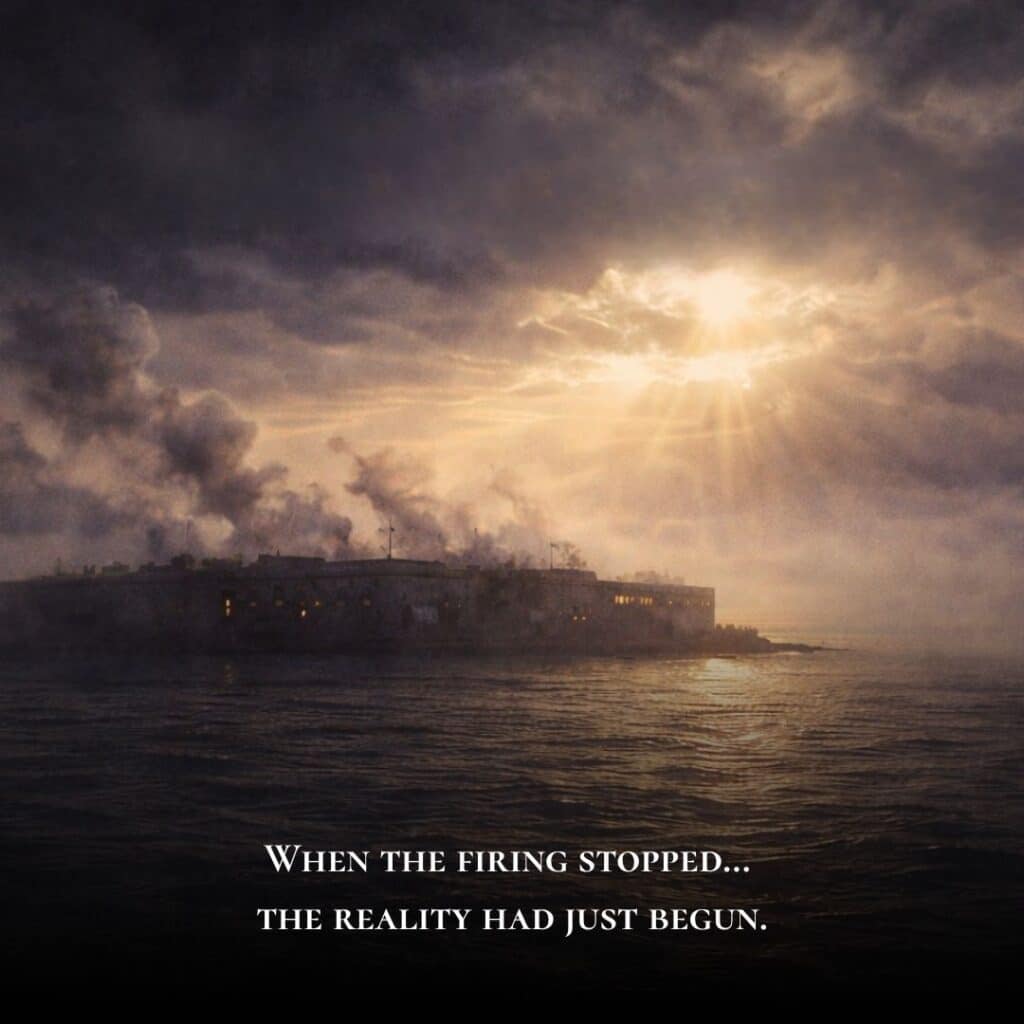
The bombardment continued for approximately thirty-four hours. By the time it came to an end, Fort Sumter had surrendered, bringing the immediate conflict there to a close. But what it marked was far greater than the outcome of a single engagement.
In the days that followed, President Abraham Lincoln called for volunteers to respond. Across the country, men began stepping forward, many with little understanding of what they were stepping into. Communities shifted quickly. Conversations turned into decisions, and daily life, which had once felt uncertain, now carried a new and undeniable weight. This moment firmly established the start of the American Civil War, transforming uncertainty into a reality that would shape the nation for years to come.
What Stayed With Them
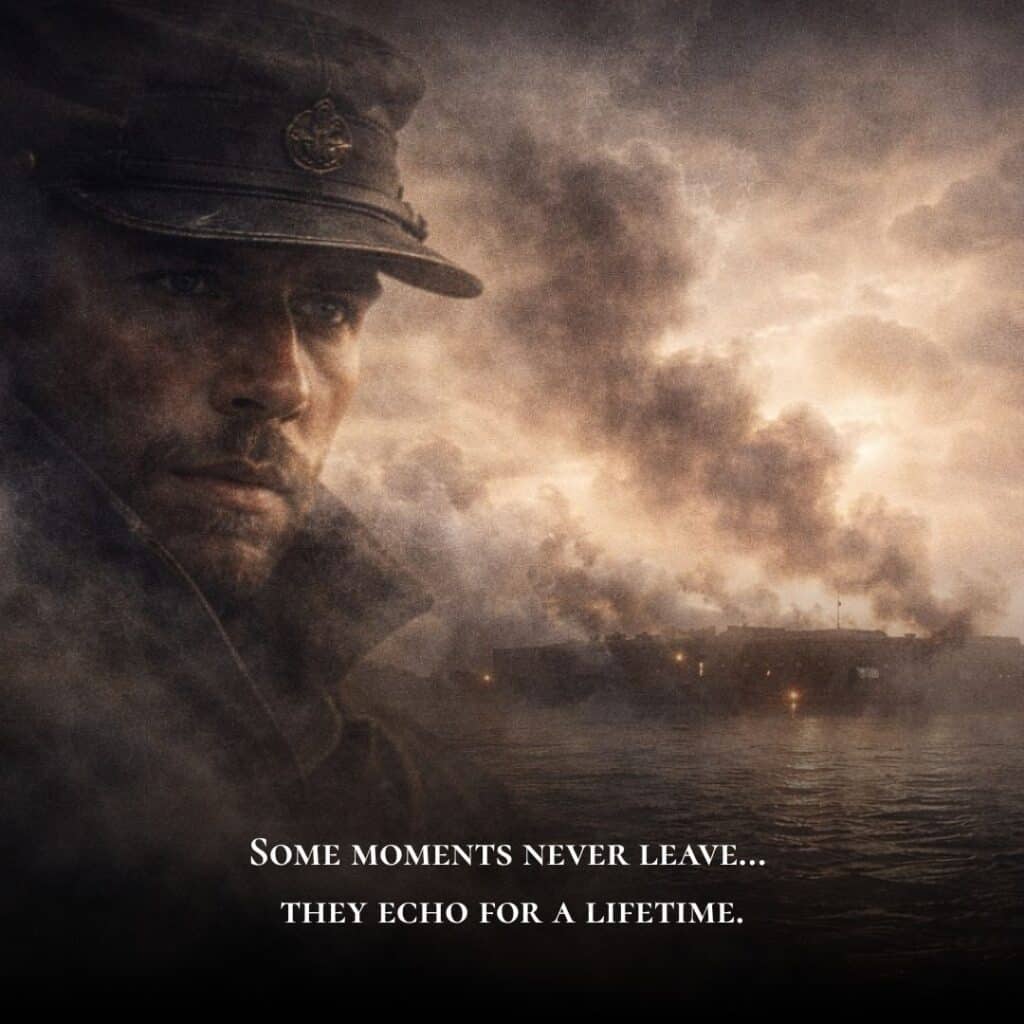
For those who had witnessed the first shots, the memory stayed with them. The sound of the cannon at dawn, the sight of smoke rising over the harbor, and the feeling of standing in a moment that could not be undone.
For soldiers, it was the realization that they had crossed into something far greater than a single engagement. For civilians, it was the understanding that the conflict would not remain distant. It would reach homes, shape communities, and leave marks that could not easily be erased.
The Part History Often Misses
What makes these first hours so powerful is not just what occurred, but how little anyone truly knew at the time. There was no clear picture of what the coming years would hold. There was no understanding of the scale and no certainty of the cost.
There was only the present moment, unfolding one cannon blast at a time. History often focuses on outcomes, on what we now know came next. But in those first hours, there was no outcome. There was only experience, reaction, and the quiet realization that a line had been crossed, and once crossed, it could not be undone. In that uncertainty, the start of the American Civil War was not yet history, but a reality unfolding in real time.
The Spark That Could Not Be Undone
The start of the American Civil War is often described in dates and events, but beneath those facts are human moments that shaped how it was lived. The hesitation before action, the confusion at the first sound, the stillness between bursts of noise, and the questions that had no answers all bring this moment closer to us.
Because sometimes, the most powerful part of history is not the outcome. It is the moment before anyone knows what comes next. And in those early hours of April 1861, a nation did not just begin a war.
It stepped into the unknown.
Because history is not only remembered for what happened. It is remembered for how it felt when everything changed.
About The Author

Mike Isaac-Jimenez is a 25-year U.S. Air Force Veteran based in San Antonio, TX. He currently serves as a Marketing and Communications Contractor with Soldiers’ Angels, where he shares his passion for storytelling with his dedication to honoring military service. Mike holds a B.S. in Technical Management (Project Management) from Embry-Riddle Aeronautical University, along with A.A.S. degrees in Mechanical & Electrical Technology and Mechanical Engineering. He writes to preserve the legacies of America’s heroes and honor those who served and are still serving.