Moon Day: Honoring the Military Veterans Who Reached the Moon
July 16, 2026
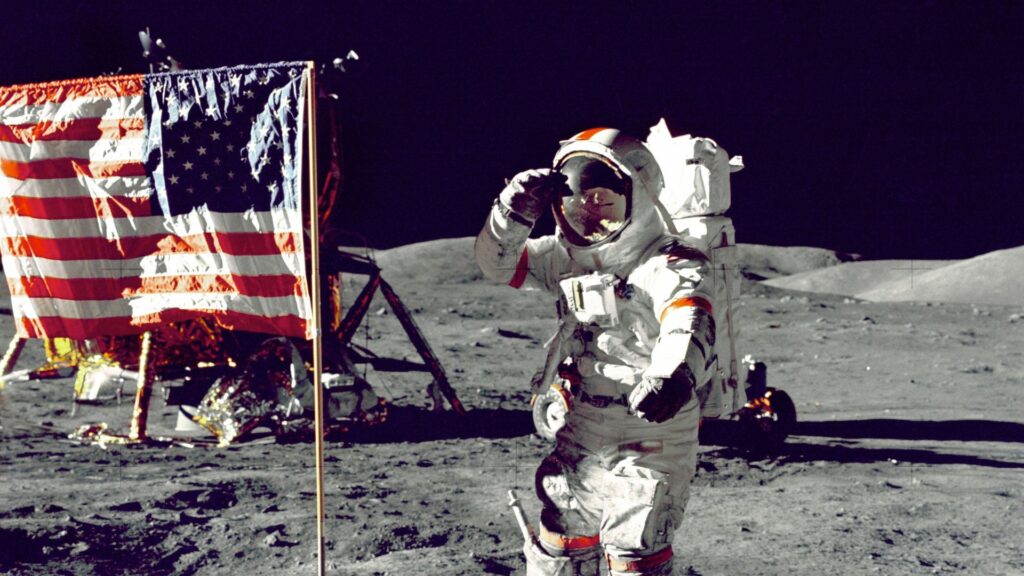
Moon Day: Celebrating the Veterans Who Helped Humanity Reach the Moon
Every year on July 20, the world celebrates Moon Day, commemorating one of humanity’s greatest achievements: the day astronauts first walked on the Moon in 1969 during NASA’s Apollo 11 mission. While the event represents a giant leap for science and exploration, it is also a powerful reminder of the dedication, discipline, and service that made the mission possible.
What many people may not realize is that the Apollo program, and America’s early space program as a whole, was built upon the experience of military Service Members. Many of the astronauts who ventured beyond Earth’s atmosphere were Veterans who had first served their country in the U.S. Navy, Air Force, Marine Corps, or Army. Their military training prepared them to operate under pressure, solve complex problems, and accept extraordinary risks.
As we celebrate Moon Day, we also recognize the Veterans whose commitment to service extended far beyond our planet.
Why Do We Celebrate Moon Day?
Moon Day marks the anniversary of July 20, 1969, when NASA astronaut Neil Armstrong became the first person to step onto the lunar surface, followed shortly afterward by Buzz Aldrin. More than 600 million people around the world watched the historic landing, making it one of the most significant moments in human history.
The famous words spoken by Armstrong:
“That’s one small step for man, one giant leap for mankind”
continue to inspire generations of explorers, scientists, engineers, and dreamers.
The success of Apollo 11 demonstrated what could be accomplished through innovation, teamwork, and perseverance. Behind that achievement stood thousands of engineers, technicians, scientists, military personnel, and support staff who dedicated years of effort to making the mission possible.
Military Service Was a Common Path to Becoming an Astronaut
In the early days of NASA, military experience wasn’t simply an advantage, it was often a requirement.
The Mercury, Gemini, and Apollo programs demanded individuals who were already accustomed to flying cutting-edge aircraft, making split-second decisions, and operating in dangerous environments. Military test pilots possessed these exact skills.
Veterans brought valuable experience in:
- Flying high-performance aircraft
- Leadership under pressure
- Emergency decision-making
- Engineering knowledge
- Teamwork in high-risk situations
- Physical and mental resilience
These qualities translated naturally to spaceflight, where every mission carried enormous risks and required flawless execution.
Many astronauts viewed becoming a NASA astronaut as another way to serve their country. This time by advancing scientific discovery and demonstrating American innovation during the Space Race.
Neil Armstrong: Naval Aviator Turned Moonwalker
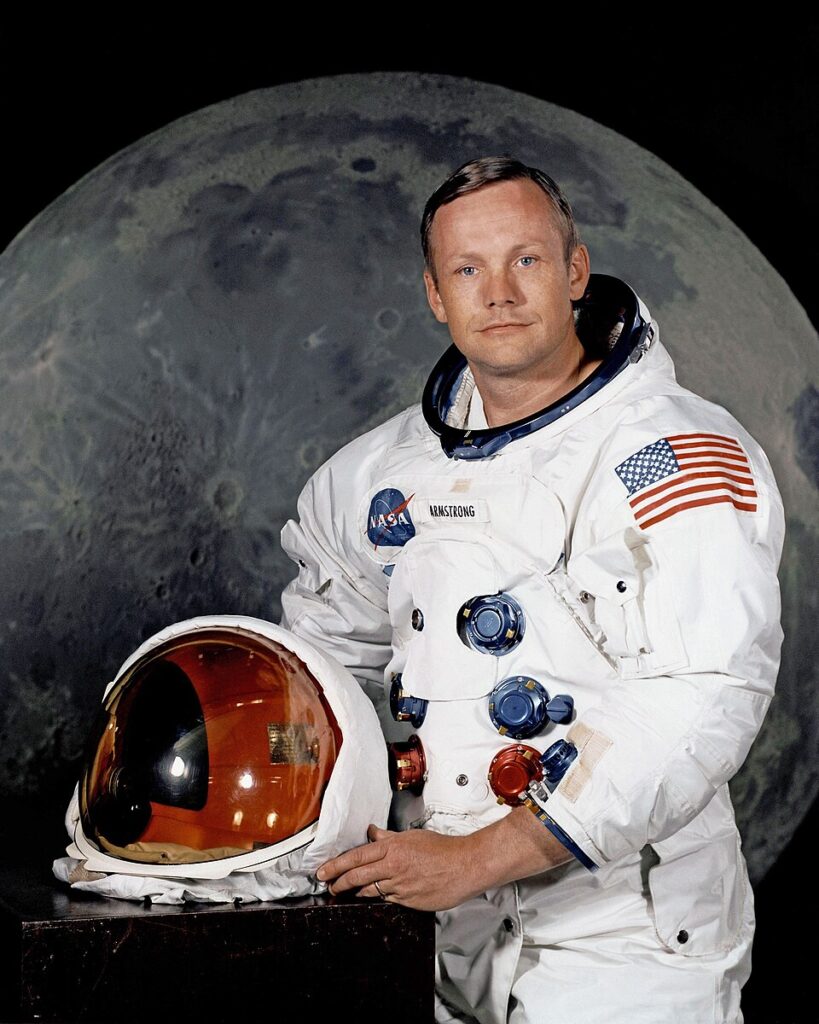
Few names are more closely associated with Moon Day than Neil Armstrong.
Before becoming the first human to walk on the Moon, Armstrong served as a naval aviator during the Korean War. Flying combat missions from the aircraft carrier USS Essex, he completed dozens of missions under demanding conditions before later becoming a highly respected test pilot.
His military background taught him precision, calm decision-making, and confidence in stressful situations. Those same qualities became invaluable during Apollo 11.
When unexpected computer alarms and fuel shortages threatened the lunar landing, Armstrong manually piloted the Lunar Module away from hazardous rocks and safely landed with only seconds of fuel remaining.
His calm professionalism under extreme pressure became one of the defining moments in the history of exploration.
Buzz Aldrin: Air Force Fighter Pilot and Engineer
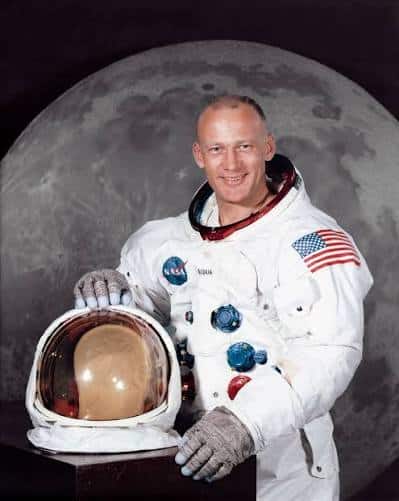
Edwin “Buzz” Aldrin also brought an impressive military career to NASA.
An Air Force fighter pilot during the Korean War, Aldrin flew numerous combat missions before earning a doctorate in astronautics from the Massachusetts Institute of Technology (MIT).
His combination of military experience and engineering expertise made him an ideal astronaut.
During Apollo 11, Aldrin became the second person to walk on the Moon, conducting scientific experiments, collecting lunar samples, and helping demonstrate that humans could successfully work on another celestial body.
His career exemplifies how military service and education can combine to advance exploration and innovation.
Michael Collins: The Often-Overlooked Hero
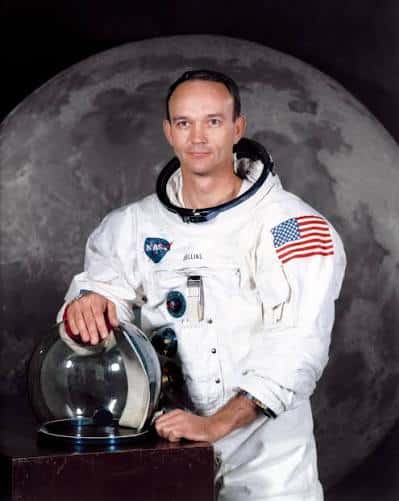
While Armstrong and Aldrin walked on the lunar surface, Michael Collins remained in lunar orbit aboard the Command Module Columbia. Collins, a U.S. Air Force officer and test pilot, carried perhaps one of the loneliest responsibilities in human history.
For hours at a time, he orbited the Moon completely alone whenever the spacecraft passed behind the lunar far side, temporarily losing communication with Earth.
His role required complete confidence in both his training and his fellow astronauts. Although he never walked on the Moon himself, the mission could not have succeeded without his expertise and steady leadership.
Veterans Continued Leading NASA
The Apollo astronauts were only the beginning.
Throughout NASA’s history, military Veterans have continued serving as astronauts, commanders, engineers, and mission specialists.
Notable Veteran astronauts include:
- John Young (U.S. Navy)
- Alan Shepard (U.S. Navy)
- Charles Duke (U.S. Air Force)
- Gene Cernan (U.S. Navy), the last person to walk on the Moon
- Frank Borman (U.S. Air Force)
- Jim Lovell (U.S. Navy)
- Story Musgrave (U.S. Marine Corps and Army Reserve)
- Eileen Collins (U.S. Air Force), the first woman to command a Space Shuttle mission
- Victor Glover (U.S. Navy), who served aboard the International Space Station
Their careers demonstrate that the values developed through military service continue to prepare leaders for some of the world’s most demanding missions.
Shared Values Between Military Service and Space Exploration
Although military operations and space exploration serve different purposes, they share many of the same core values.
Service Before Self
Whether defending the nation or advancing scientific discovery, both professions place mission success above personal recognition. Astronauts spend years preparing for missions that may last only days or weeks, just as Service Members dedicate countless hours to training before deployment.
Teamwork
No astronaut reaches space alone. Every launch represents the combined efforts of thousands of people working together. From engineers and flight controllers to technicians and support personnel. Military operations rely on the same principle: success depends on trust, communication, and teamwork.
Courage
Space exploration has never been without risk. The Apollo astronauts understood the dangers they faced, yet continued pushing the boundaries of human knowledge. That willingness to accept risk in pursuit of something greater mirrors the courage demonstrated by members of the U.S. Armed Forces every day.
Lifelong Learning
Astronauts continually study engineering, science, medicine, and technology. Likewise, military professionals constantly adapt to evolving missions, equipment, and challenges. Both careers demand humility, curiosity, and a commitment to continual improvement.
Moon Day Inspires the Next Generation
The legacy of Moon Day extends well beyond history books.
Today’s astronauts come from increasingly diverse backgrounds, including military Veterans, scientists, physicians, engineers, educators, and researchers.
Many young people first become interested in science, technology, engineering, and mathematics (STEM) after learning about the Apollo missions. Others discover a passion for aviation or military service after reading about astronauts who first wore a military uniform before wearing a space suit.
The Apollo program reminds us that extraordinary accomplishments begin with education, determination, and a willingness to tackle difficult challenges.
Celebrating Moon Day
This Moon Day, take a moment to reflect on one of humanity’s greatest achievements and the Veterans who helped make it possible.
Whether you watch footage of the Apollo 11 landing, visit a science museum, learn more about America’s space program, or simply share the stories of military astronauts with your family, July 20 serves as a reminder that courage and curiosity often go hand in hand.
More than fifty years after humanity first stepped onto the Moon, the mission continues to inspire people around the globe. As new generations prepare to return to the Moon and eventually travel to Mars, they build upon a legacy established by Veterans who demonstrated that service, perseverance, and teamwork can accomplish the seemingly impossible.
On Moon Day, we celebrate not only an extraordinary moment in history but also the military men and women whose dedication helped carry humanity to new frontiers, proving that the spirit of service can truly reach beyond the stars. Humanity’s next giant leap tomorrow.
A Lasting Legacy of Service
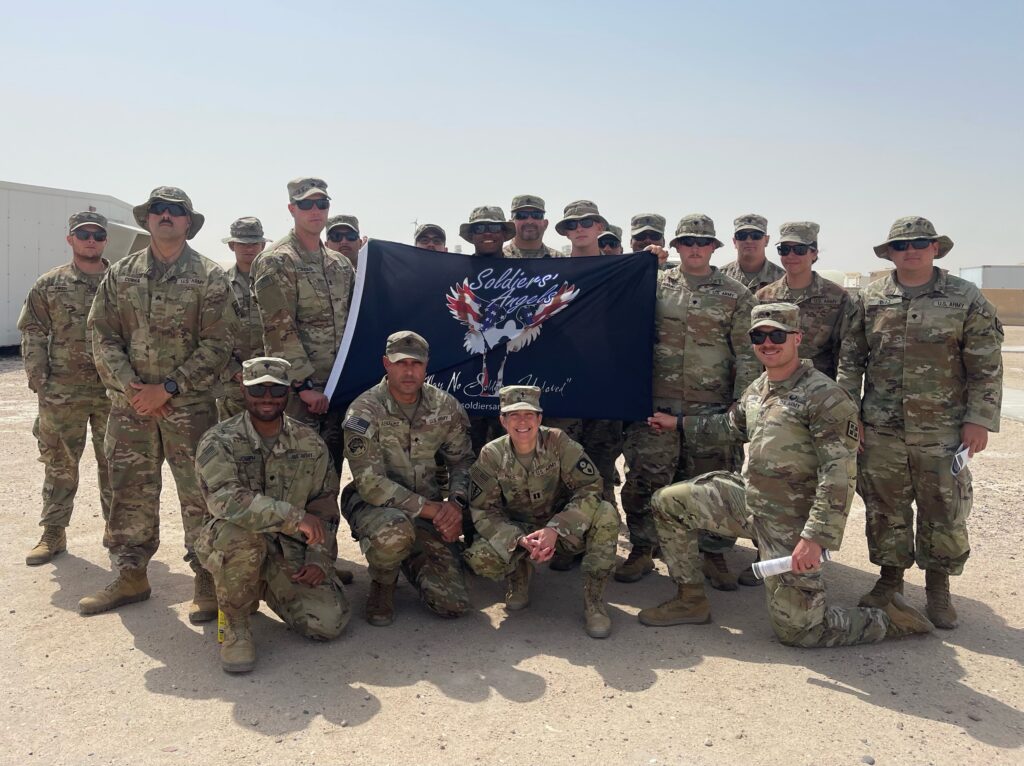
For organizations like Soldiers’ Angels, Moon Day offers another opportunity to recognize the incredible contributions Veterans continue to make long after their military careers end.
Some Veterans become teachers. Others become engineers, doctors, entrepreneurs, community leaders, or volunteers.
Some, like Neil Armstrong, Buzz Aldrin, Michael Collins, and many other military astronauts, helped expand humanity’s understanding of the universe.
Their stories remind us that service does not always end when a uniform comes off. The leadership, discipline, and commitment developed in military service often continue shaping history in remarkable ways.
At Soldiers’ Angels, every act of kindness reminds a Service Member that they are valued and never forgotten. Your support helps strengthen the military community and reinforces the idea that no one serves alone.
Volunteer with us and be part of a mission that uplifts those who serve. After all, the next Service Member you encourage, support, or inspire today could be the one who helps lead humanity’s next giant leap tomorrow.
About the Author

Adrian Martinez is the Marketing and Communications Manager for Soldiers’ Angels. He served in the U.S. Navy for four years and graduated from The University of Texas at San Antonio in 2021.