TRIBUTE TO OUR HEROES: Todd Nicely
December 11, 2025
In this episode of Tribute To Our Heroes, we talk with Corporal (Ret.) Todd Nicely.
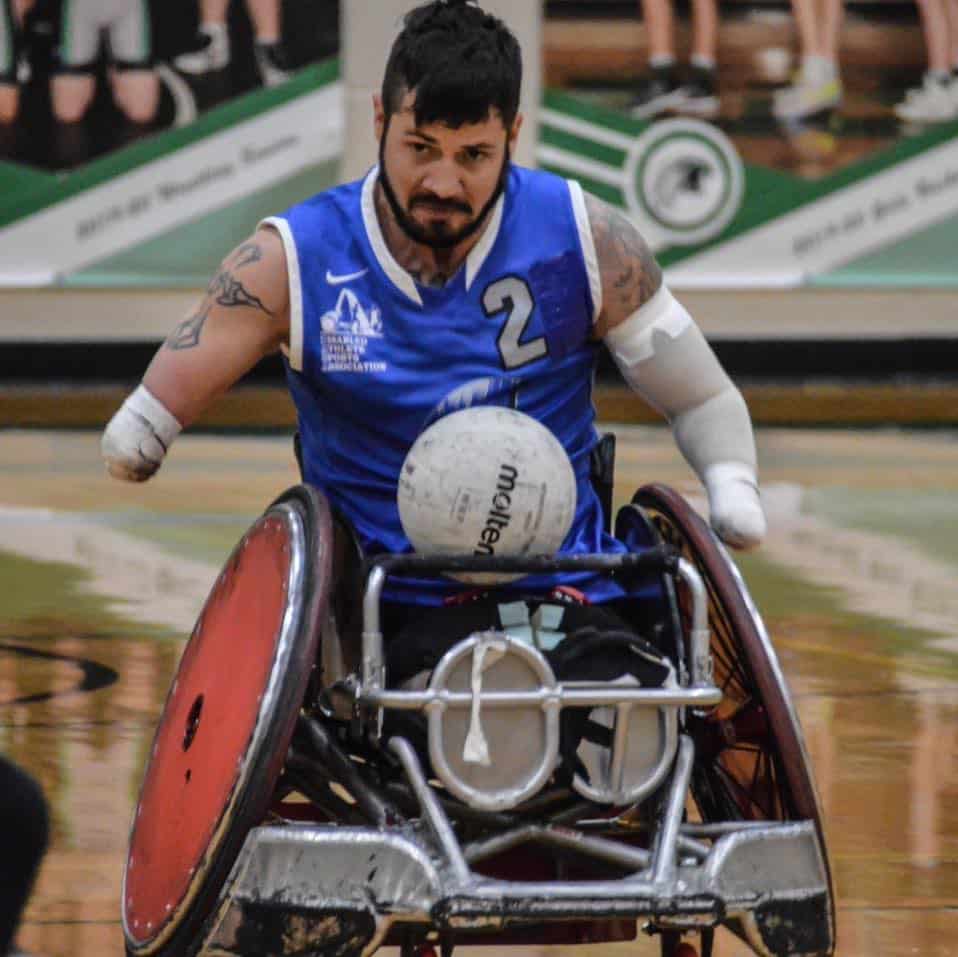
He shares his journey from leading Marines in combat to facing life-changing injuries and the struggles of reintegrating into civilian life. From the battlefield in Iraq and Afghanistan to his recovery and advocacy for veteran mental health, Todd opens up about the challenges, resilience, and lessons that have shaped him—and how he now uses his experiences to support and inspire others.
You can view our full video interview with Todd below.
Q: For those who don’t know you, can you share a little about yourself?
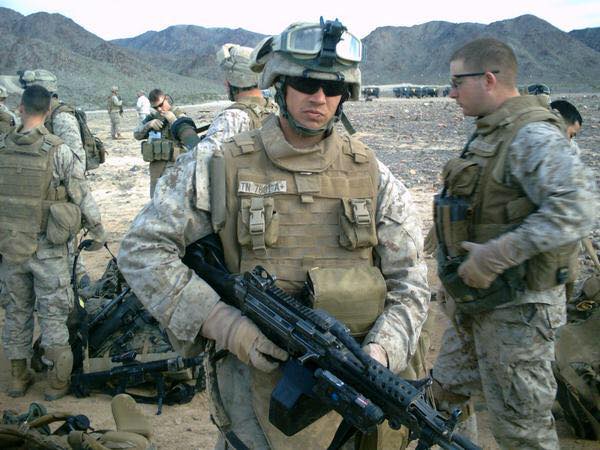
A: I’m Corporal (Ret.) Todd Nicely. I served in the Marine Corps from 2007 to 2011, completing deployments to both Iraq and Afghanistan as an 0311 infantry squad leader. I grew up as a humble athlete who loved playing football, and before enlisting I worked in construction. I actually planned to join the Marines back in 2001, but after 9/11 my mom wouldn’t sign for me. Years later, as the economy declined and I felt the need to challenge myself, I finally made the decision to enlist and test myself the way I’d always wanted.
Q: Why did you choose the Marine Corp. and what was your boot camp experience like?
A: I originally planned to join the Army—I had already taken the ASVAB and wanted to go airborne, especially since my grandparents served in World War II. But ultimately, I wanted to push myself, and everyone said the Marine Corps was the toughest branch. I wanted to see if I could handle it. When I got there, I realized it really was challenging. I was older than most recruits—23 at the time—so I worked hard, even jump-roping at night to improve my run times. The drill instructors didn’t mess with me much since many were close to my age, but boot camp was still tough. You fail constantly, by design, and that was frustrating. But it taught me honor, courage, and how not to quit on the person next to you. Honestly, the hardest part was dealing with authority and not getting irritated with some of the younger guys—but that was all part of the challenge I signed up for.
Q: What was it like to be deployed to Afghanistan as a squad leader?
A: As a squad leader, I constantly pushed my guys to think through scenarios—where they’d go, what they’d do—so they were always mentally prepared. But when that first bullet cracked past us, I froze for a moment. Then it hit me: I’m the one in charge. I knew that if I didn’t move, no one else would, so I forced myself to act even though every instinct told me not to. I was about 25 at the time, leading Marines who were mostly 18 or 19, some with families already. Because of that, I often went first or used myself as bait. My mindset was, “I’m older. I’ve lived a little more. If someone has to take the risk, it should be me.” Being 25 and responsible for the lives of others was incredibly humbling.
Q: Do you still feel like the the leadership skills that you learned in the military are still affecting and helping you out today?
A: Oh, absolutely. Some habits from the Marine Corps definitely carried over into my civilian life—sometimes a little too much, like treating my family as if they’re my squad. But those experiences have also helped me in positive ways. I went through a program called Focus Marines when I was struggling with PTSD, and it completely changed my life. Now I mentor there, helping other Marines work through their own challenges, just like it helped me.
Q: Tell me about the day of your incident.
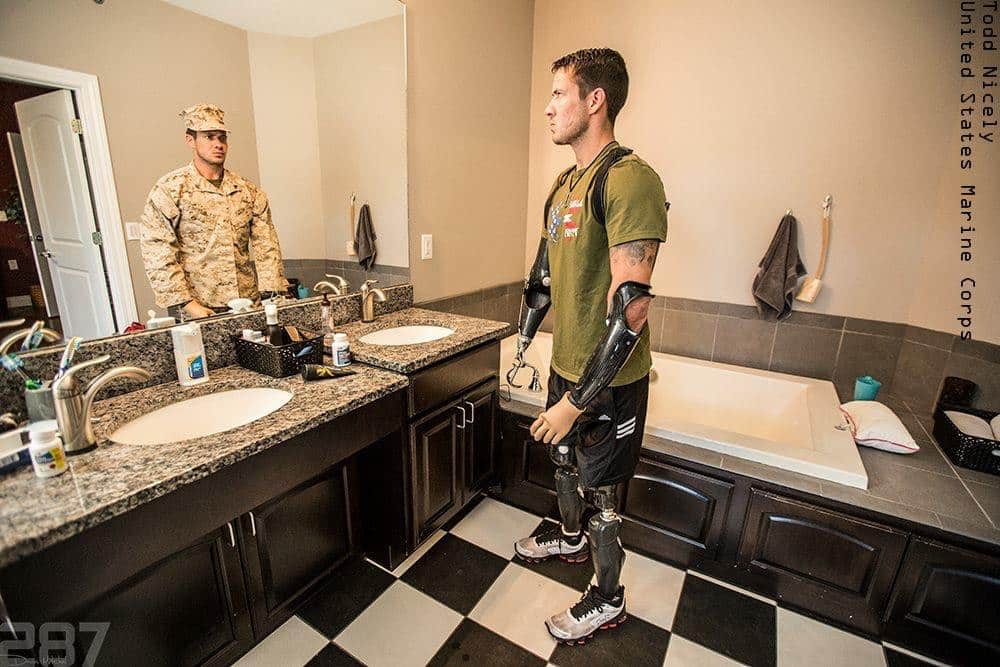
A: My injury happened on March 26, 2010. My squad had trained as a support squad, but we ended up becoming the assault squad in southern Helmand, Afghanistan—out on missions almost every day from 11 to 4, taking fire two or three times a day for months. We were exhausted and only a month or two away from going home.
Another squad was watching a mine that higher command had planted with a tracking device, but they couldn’t mark it without revealing their position. Even though it was supposed to be my rest day, I was asked to go out and mark it for them. On our way back, we had to cross a bridge. Looking back, all the signs were there—the local shop owner wasn’t in his usual spot, everything was quiet—but I was tired and frustrated, and I missed it.
I swept the bridge, but the enemy had switched from metal containers to plastic jugs, so my detector didn’t pick anything up. When I stepped forward, my left foot hit a pressure plate. I remember flying through the air thinking, “It finally got me.”
I landed near the canal—thankfully not in it—and with no corpsman present, one of my Marines pulled me up the hill and applied all the tourniquets. A helicopter happened to be nearby returning from a mission and reached us in about six minutes, getting me to Camp Dwyer and ultimately saving my life.
Q: What do you remember happening after the mine went off?
A: When I stepped on the device, I felt the blast immediately—being thrown through the air, the dust everywhere, and then the splash of water on my face, which told me I had landed near the canal. I remember being dragged up the hill, drifting in and out of consciousness. At one point, I realized I was screaming and told myself to stop because I didn’t want my Marines’ final memory of me to be that.
The corpsman from the other team ran about 300 meters to get to me. I vaguely remember him slapping me to keep me awake and me threatening to punch him—even though I had no arms at that point. We laugh about that now.
Once they got me onto the helicopter, I tried to focus on one thing: keep breathing. With two collapsed lungs, that was all I could think about—“If you’re breathing, you’re alive.”
I stayed conscious longer than I realized. The medical staff later told me I was still awake at Camp Dwyer, blinking and answering questions even though I don’t remember any of it. They had to operate on me while I was awake because they couldn’t give me morphine. They even initiated a walking blood bank—calling for anyone with A-positive blood to donate so they could transfer it directly into me and keep me alive.
Q: Did any other members of your squad get hurt in the same incident?
A: Thankfully, no one else was injured in the blast. People often ask if I would do it all over again, and I always say yes—because none of my Marines were hurt, and I knew I could take the brunt of it. But after the injury, things got hard. In 2016, I attempted suicide and shot myself in the chest, but I survived. That was a wake-up call—I realized I wasn’t meant to die yet and still had something to live for.
The bullet hit my heart valve, which now only functions at about 15%, and I live with that consequence. That experience pushed me to become a strong advocate for veteran suicide awareness. I had to look my family in the eyes afterward, knowing the pain I caused—not from combat, but from my own actions. I never call it selfish, because it’s really about deep pain and hurt, but in that moment, you don’t realize how many lives you can impact with one decision.
Q: What do you remember and feeling after you start to regain consciousness after they treated your injuries?
A: When I woke up in the ICU, it was around Easter. The doctors asked what I wanted, and I joked, “Give me a beer.” They actually ran out and bought me a six-pack of Corona because they didn’t think I was going to make it—I had multiple infections and was in bad shape. Even though I had a trach and wasn’t supposed to drink anything, they opened a bottle for me. I took one sip and immediately asked for water because my mouth was so dry.
Sergeant Major Kent and the Commandant of the Marine Corps at the time, General Conway, came to pin my Purple Heart on me while I still had tubes everywhere because they thought I might not survive. I like to believe they did it because they had the time—not because they thought I was dying—but either way, I eventually pulled through.
One of the first things I asked for was to talk to my guys. Somehow the staff got clearance and tracked down the sat phone number our squads rotated. They made sure my squad had it that day, and I was able to call them and let them know I was going to be okay.
Q: Tell me about how it was like coming back home after everything happened.
A: When I first came home, I handled things pretty well. I treated recovery like another mission—get into prosthetics, learn to move again, stay focused. Doctors told me it would take four years, one year per limb, but I refused to accept that and pushed myself to get out in a year and a half. After that, organizations like Tunnel to Towers and the Gary Sinise Foundation built me a home. But once I was in it, the reality hit: I no longer had a mission. I had nothing to work toward, and the permanence of my injuries started to sink in.
That’s when the depression hit hard. I started drinking heavily, self-medicating, and losing sense of purpose. I didn’t believe I could do anything anymore, even though others saw potential in me that I couldn’t see myself. My PTSD didn’t fully surface until three or four years later, and that downward spiral eventually led to my suicide attempt.
It took the Focus program to change my mindset—to help me understand why I felt the way I did and to confront the pain I had been burying. I never truly grieved losing my arms and legs because I went straight into “mission mode,” trying to prove I could still do everything. I never grieved the loss of my best friend either, because in Afghanistan I couldn’t show my squad I was hurting. I had to be the Marine they needed—and holding all that in nearly cost me my life.
Want to watch more? Click here to watch more vlogs from the Tribute to our Heroes series, or go to our YouTube Channel to see what other events we have going on.