Operation Popeye: The Secret Weather War in Vietnam
March 10, 2026
In war, armies fight for land. They fight for power. They fight for ideology. But during Operation Popeye, the United States fought the sky. This was not science fiction. It was not a conspiracy theory. As a result, this was a highly classified military program conducted during the Vietnam War, in which the United States sought to control the weather as a weapon. For years, almost no one knew it existed.
The battlefield in Vietnam stretched far beyond rice paddies and jungle clearings. It reached into hidden supply networks winding beneath dense canopy, across neighboring countries, and, for a time, into the clouds themselves.
From 1967 to 1972, U.S. aircraft dropped particles into storm systems over the Ho Chi Minh Trail. The goal was to increase rainfall and turn the monsoon into a tactical advantage. The mission was unconventional, almost surreal in its simplicity, yet it marked a bold and unprecedented attempt to use weather itself as a weapon.
The Battlefield Was the Rain

By the mid-1960s, North Vietnamese forces were moving men and supplies south along the dense jungle network known as the Ho Chi Minh Trail. This trail was not a single road. It was a complex web of paths stretching through Laos and Cambodia, allowing the North to reinforce and resupply troops fighting in South Vietnam.
American bombing campaigns sought to disrupt it. Ground operations struggled to cut it off. The jungle swallowed vehicles, soldiers, and surveillance.
U.S. planners asked a radical question: what if they could make it rain so much that the roads would disappear? Not just seasonal rain. Not ordinary rain. Relentless, engineered rain that could slow movement and wash out supply routes.
The Science Behind the Storm

Cloud seeding was not new. Scientists had been experimenting with weather modification since the 1940s. The concept was straightforward: certain chemicals, such as silver iodide, could be dispersed into clouds to encourage precipitation. More condensation meant more rain.
The military saw potential. Under Operation Popeye, aircraft flew over targeted areas and released silver iodide into storm clouds. The goal was simple and tactical:
- Extend the monsoon season
- Soften roads into mud
- Wash out supply routes
- Slow enemy movements
The operation’s unofficial motto reflected its approach: “Make mud, not war.”
Between 1967 and 1972, U.S. planes reportedly conducted thousands of cloud seeding missions over Laos, Cambodia, and North Vietnam. The program was overseen by the United States Department of Defense and coordinated with elements of the Central Intelligence Agency. It was classified, deniable, and operated largely in the shadows.
Did It Work?
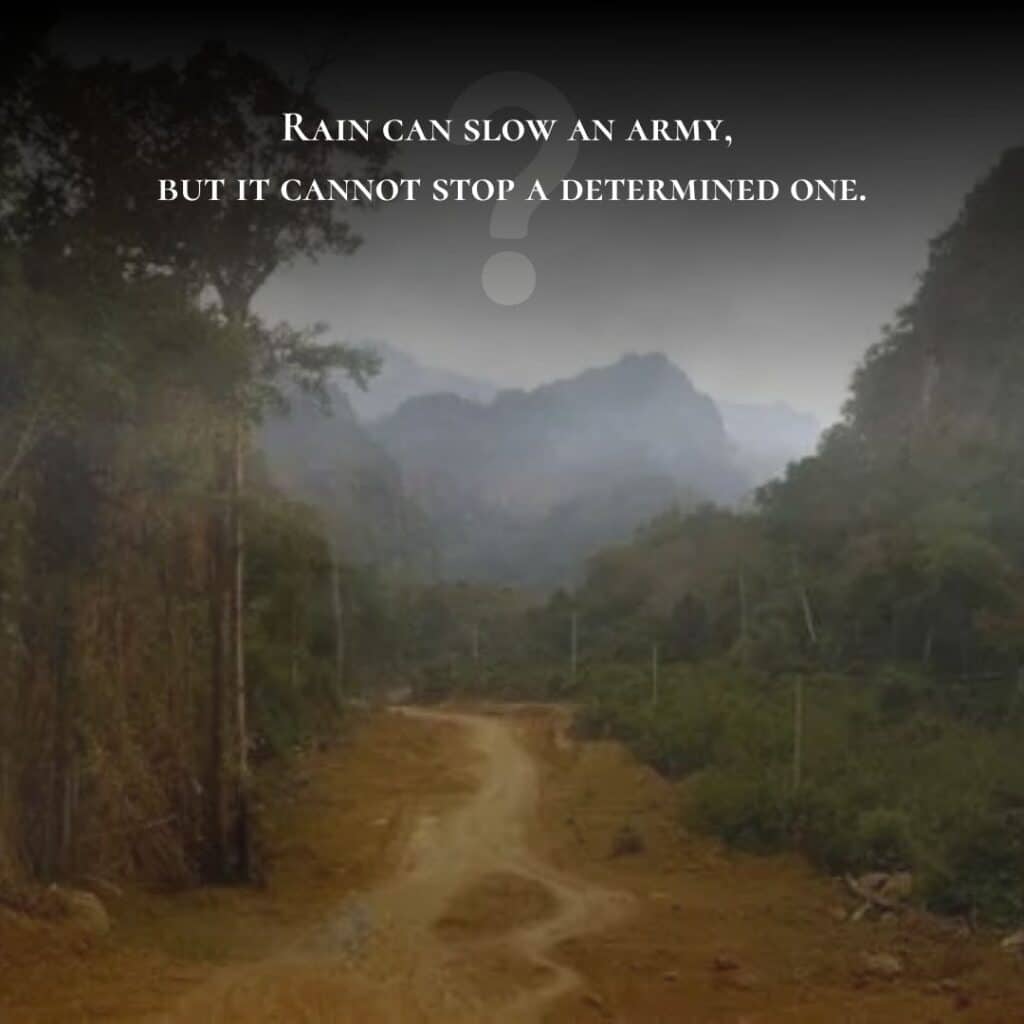
The effectiveness of Operation Popeye is difficult to quantify. Some internal military assessments indicated that rainfall in targeted areas increased measurably. Intelligence reports suggested that sections of the Ho Chi Minh Trail became more difficult to traverse. Mudslides were reported, and convoys slowed.
Yet weather is inherently unpredictable. Storms shifted, winds changed direction, and clouds dissipated. There was no precise way to guarantee rainfall in specific locations.
The program did not end the war. It did not sever supply lines. North Vietnamese forces adapted quickly, rebuilding roads, moving supplies at night, and using bicycles, porters, and hidden bypasses. Mud swallowed one path, and another emerged.
Operation Popeye created obstacles, but it was not a decisive weapon. It represented experimentation, innovation, and an expansion of the battlefield into new domains.
Secrecy and Disclosure

For several years, Operation Popeye remained unknown to the public. Only a limited number of officials were aware of the program’s scope.
In 1971, investigative journalist Jack Anderson revealed that the United States had conducted weather modification operations in Southeast Asia. His reporting prompted congressional hearings, and official documentation confirmed the program’s existence.
The disclosure contributed to international attention on military applications of environmental science. In 1977, the United Nations adopted the Environmental Modification Convention, or ENMOD, formally restricting the use of environmental modification techniques in warfare that could cause widespread, long-lasting, or severe effects.
Operation Popeye remains a historical reference point in discussions of unconventional military strategy and the integration of science into operational planning.
Operation Popeye in Context

This initiative was not an isolated example of unconventional thinking during the Vietnam War. The conflict saw the integration of technology, environmental understanding, and innovation into military operations.
Weather modification during the war demonstrates the ways military planners sought to leverage scientific research to influence the battlefield. It also shows the limits of such approaches. Nature proved difficult to control, and the impact of cloud seeding was often inconsistent and localized.
The program highlights the evolving role of environmental science in warfare and the challenges of translating experimental methods into reliable operational advantage.
The Evolution of Weather in Warfare
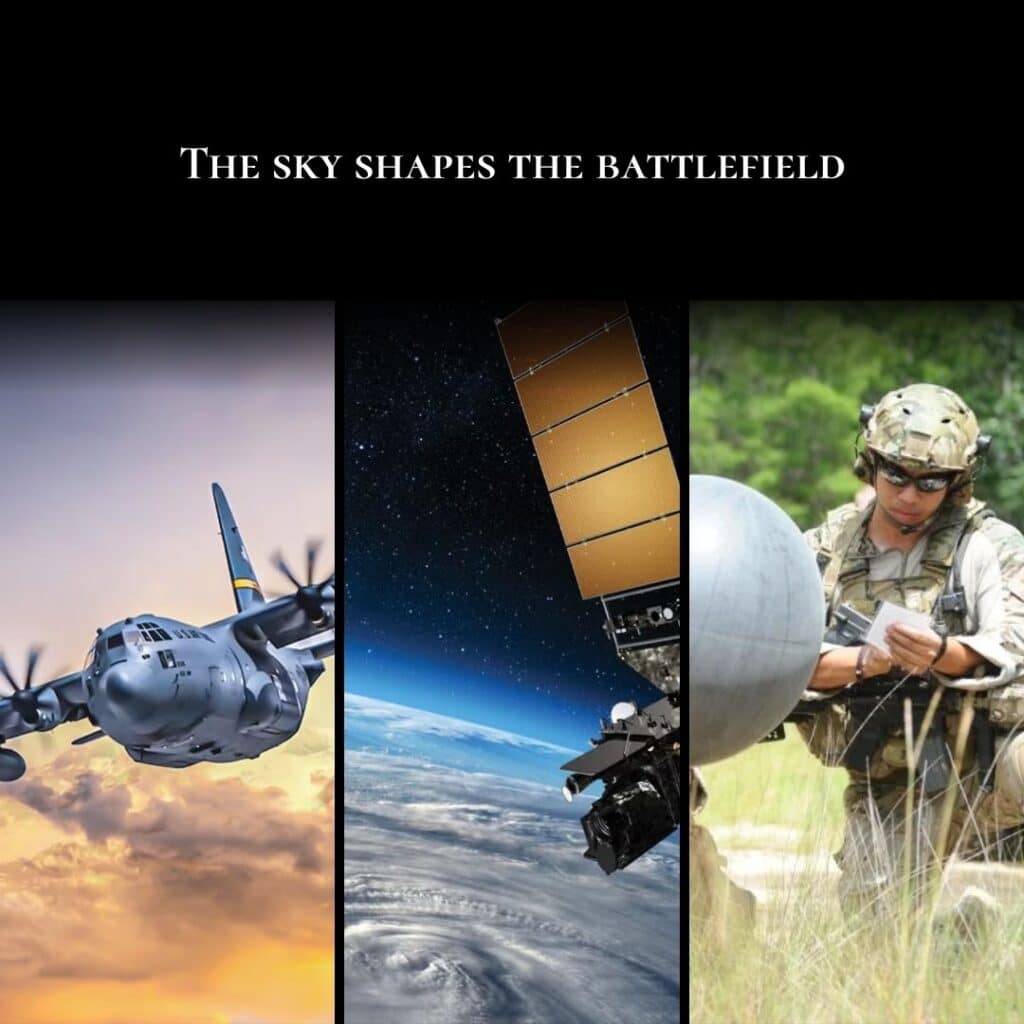
Operation Popeye represented one phase in the military’s evolving relationship with weather. During the Vietnam War, the United States experimented with directly influencing atmospheric conditions. Today, the approach is very different.
Within the United States Air Force, Combat Weather Teams deploy alongside ground and air units to provide real-time environmental intelligence. Their mission is not to alter storms, but to understand them. Wind speed, cloud cover, visibility, and precipitation all affect flight operations, parachute drops, drone missions, and ground maneuvers.
Modern forecasting relies on satellites, radar systems, and advanced modeling, much of it supported by data from agencies such as the National Oceanic and Atmospheric Administration. These tools allow commanders to anticipate conditions with far greater accuracy than ever before.
The lesson is clear. Weather continues to shape the battlefield, just as it always has. The difference is that modern strategy prioritizes prediction over manipulation. Instead of attempting to engineer the sky, today’s military treats environmental awareness as a force multiplier. In contemporary warfare, insight rather than modification is the advantage.
A Unique Chapter in Military History

Operation Popeye remains one of the most unusual chapters of the Vietnam War. It expanded the battlefield into the atmosphere, integrated scientific experimentation into operational planning, and demonstrated the creativity and complexity of military strategy.
The program illustrates how innovation, intelligence, and experimentation intersect in warfare. While it did not decisively alter the conflict, it left a lasting mark on military thinking about environmental conditions, operational planning, and the role of science in strategy.
From the jungles of Southeast Asia to the skies above, Operation Popeye remains a reminder that the tools of war extend far beyond traditional weapons and that understanding the environment can be as critical as any conventional tactic.
About The Author

Mike Isaac-Jimenez is a 25-year U.S. Air Force Veteran based in San Antonio, TX. He currently serves as a Marketing and Communications Contractor with Soldiers’ Angels, where he shares his passion for storytelling with his dedication to honoring military service. Mike holds a B.S. in Technical Management (Project Management) from Embry-Riddle Aeronautical University, along with A.A.S. degrees in Mechanical & Electrical Technology and Mechanical Engineering. He writes to preserve the legacies of America’s heroes and honor those who served and are still serving.